The Rail Fence Quilt Block Pattern is one of the most classic and beginner-friendly designs in quilting, yet it remains visually powerful and endlessly adaptable. A well-constructed Rail Fence Quilt Block Pattern uses simple strip piecing techniques to create strong lines, movement, and contrast across a quilt top. Because of its straightforward structure, this pattern is often recommended for beginners, but experienced quilters also appreciate it for scrap projects, modern layouts, and bold color experimentation.
At first glance, the Rail Fence Quilt Block Pattern may look simple, but its design flexibility is what truly makes it stand out. By rotating blocks, alternating color values, or adjusting strip widths, you can create dramatically different visual effects using the same basic construction method. From traditional country quilts to contemporary high-contrast designs, the Rail Fence Quilt Block Pattern adapts beautifully to different styles and themes.
Another reason the Rail Fence Quilt Block Pattern continues to be popular is efficiency. Strip piecing allows quilters to sew long fabric strips together and cut them into blocks quickly. This technique saves time while improving accuracy and consistency. Whether you are making a baby quilt, a full-size bed quilt, or a wall hanging, the Rail Fence Quilt Block Pattern offers speed without sacrificing visual impact.
Understanding the Structure of the Rail Fence Quilt Block Pattern
The foundation of the Rail Fence Quilt Block Pattern is a set of fabric strips sewn side by side to create a unit. These strips are typically equal in width and arranged to form a rectangular or square block. The simplicity of this structure makes the pattern highly accessible.
Most versions of the Rail Fence Quilt Block Pattern use three strips per block, though variations may use four or more. After sewing the strips together, the strip set is cut into equal segments. These segments become the individual blocks when rotated and arranged in the quilt layout.
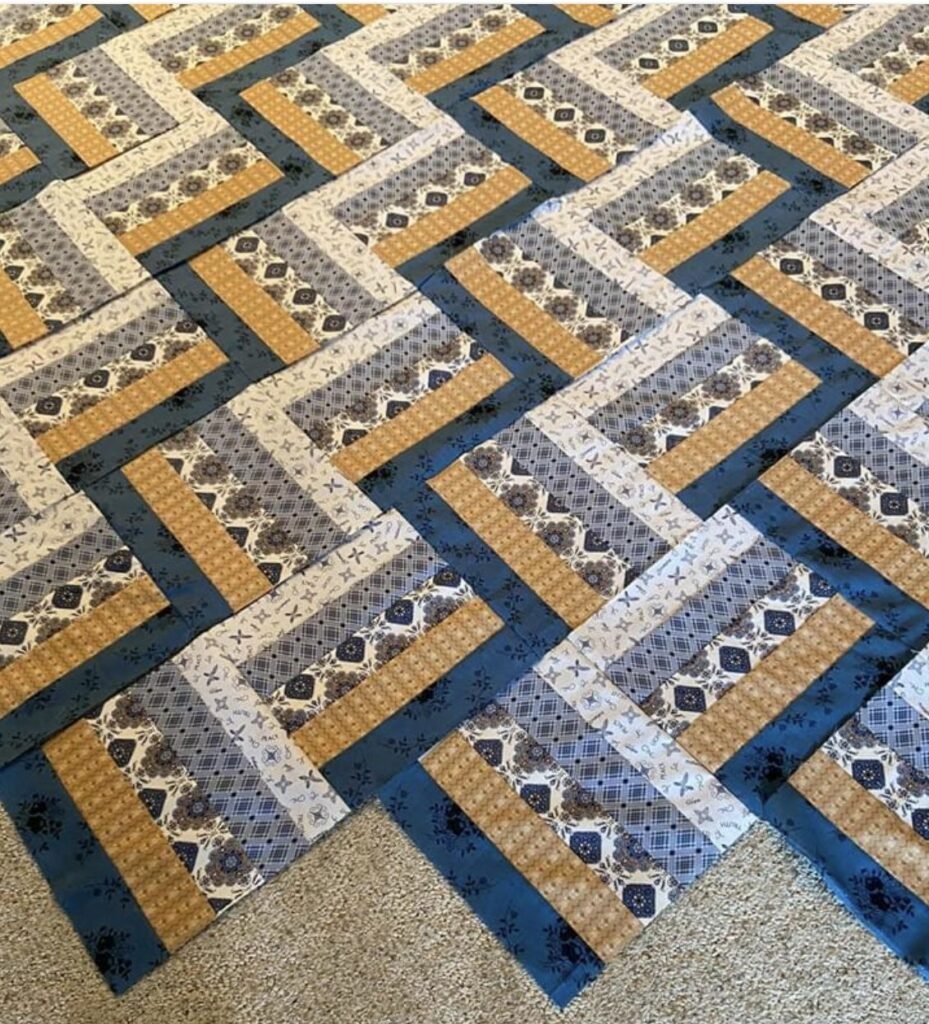
Rotation is a key design element in the Rail Fence Quilt Block Pattern. By turning blocks in alternating directions, you create zigzag patterns, diagonal movement, or woven effects. Without rotation, the quilt would appear as simple stripes.
Color value placement plays a major role in the visual outcome of the Rail Fence Quilt Block Pattern. Light, medium, and dark strips can be arranged to create depth and movement. Strategic contrast gives the quilt more dimension.
Because the construction relies on straight seams, the Rail Fence Quilt Block Pattern is an excellent project for improving seam consistency. Accurate seam allowances ensure that blocks align properly when assembled.
Block size in a Rail Fence Quilt Block Pattern depends on strip width and the number of strips used. Wider strips create larger, bolder blocks, while narrow strips produce more intricate visual texture.
Fabric Selection and Color Planning
Fabric choice can completely transform a Rail Fence Quilt Block Pattern. Solid fabrics create bold, graphic results, while prints add softness and texture. Beginners often find that solids help them clearly see the strip alignment during construction.
High-contrast combinations strengthen the impact of a Rail Fence Quilt Block Pattern. For example, pairing dark strips with very light strips creates dramatic visual movement. Low contrast produces a softer, blended look.
Scrap quilting works exceptionally well with the Rail Fence Quilt Block Pattern. Because the design is strip-based, leftover fabric pieces can be cut into strips and organized by color value. This makes it an efficient stash-busting project.
Gradient color schemes are another creative approach to the Rail Fence Quilt Block Pattern. Arranging strips from light to dark within each block produces a subtle ombré effect across the quilt surface.
Print scale should be considered when planning a Rail Fence Quilt Block Pattern. Medium to small prints often work best within strips, as large prints may lose detail when cut into narrow pieces.
Before sewing, laying out strip combinations is helpful when working on a Rail Fence Quilt Block Pattern. This preview step ensures that color balance and contrast meet your expectations.
Step-by-Step Construction Method
The first step in building a Rail Fence Quilt Block Pattern is cutting fabric into equal-width strips. Accuracy at this stage is essential, as uneven strips can affect final block size.
Next, sew the strips together lengthwise to form a strip set in your Rail Fence Quilt Block Pattern. Use a consistent seam allowance and press seams in one direction to reduce bulk.
After pressing, sub-cut the strip set into equal segments. Each segment will become one block unit in the Rail Fence Quilt Block Pattern. Measuring carefully ensures uniform blocks.
Rotate the segments as desired to create the signature design of the Rail Fence Quilt Block Pattern. Alternating directions usually produces the most dynamic layout.
Join the rotated segments into rows, then sew the rows together to complete the quilt top. Nesting seams improves alignment in a Rail Fence Quilt Block Pattern.
Finally, add borders if desired. Borders can frame the Rail Fence Quilt Block Pattern or extend the strip concept outward with additional pieced strips.
Layout Variations and Design Possibilities
One of the most exciting aspects of the Rail Fence Quilt Block Pattern is layout variation. Simple rotation creates zigzag patterns that resemble woven rails or fences, giving the pattern its name.
Setting blocks on point changes the direction of the lines in a Rail Fence Quilt Block Pattern. This adds diagonal movement and a more complex visual feel without altering block construction.
Using more than three strips per block produces a denser version of the Rail Fence Quilt Block Pattern. Additional strips create a finer stripe appearance.
Alternating color placement in different rows creates a woven illusion within the Rail Fence Quilt Block Pattern. This technique adds depth and interest.
Combining the Rail Fence Quilt Block Pattern with solid sashing strips can separate blocks and highlight the rotation effect. This is useful when using busy prints.
Modern interpretations of the Rail Fence Quilt Block Pattern often feature bold solids and minimal borders. Traditional versions may include floral prints and pieced borders for a classic look.
Quilting and Finishing Tips
Quilting lines should complement the strong directionality of the Rail Fence Quilt Block Pattern. Straight-line quilting along strip seams enhances the geometric effect.
Diagonal quilting can add contrast to the linear look of the Rail Fence Quilt Block Pattern. This technique creates texture without overwhelming the design.
Thread color selection is important in finishing a Rail Fence Quilt Block Pattern. Neutral threads blend into multiple fabrics, while contrasting threads highlight stitching patterns.
Batting choice affects the texture of your Rail Fence Quilt Block Pattern. Low-loft batting maintains a flatter, modern appearance, while medium loft adds softness.
Binding can either match one of the strip colors or provide contrast in a Rail Fence Quilt Block Pattern. A bold binding can frame the quilt dramatically.
After finishing, washing the quilt gently softens the Rail Fence Quilt Block Pattern and enhances its cozy, handmade appeal.
FAQ About Rail Fence Quilt Block Pattern
Is the Rail Fence Quilt Block Pattern good for beginners?
Yes, the Rail Fence Quilt Block Pattern is one of the best beginner quilting projects because it uses straight seams and simple strip piecing.
How many strips are needed per block?
Most Rail Fence Quilt Block Pattern designs use three strips per block, but variations may use more.
Can I use scrap fabric?
Absolutely. The Rail Fence Quilt Block Pattern is ideal for scrap quilting because strips can be cut from leftover pieces.
What size strips should I cut?
Strip width depends on your desired block size. Wider strips create larger blocks in a Rail Fence Quilt Block Pattern.
Does the pattern require special tools?
No special tools are required for a Rail Fence Quilt Block Pattern, just standard quilting rulers and a sewing machine.
How can I make the design more modern?
Use bold solid fabrics and high contrast in your Rail Fence Quilt Block Pattern for a contemporary style.
Conclusion
The Rail Fence Quilt Block Pattern is a timeless, versatile, and efficient quilting design that works for all skill levels. In this guide, you learned about its structure, fabric selection strategies, construction steps, layout variations, and finishing tips. By experimenting with strip width, color value, and block rotation, you can create countless unique quilts using the same foundational Rail Fence Quilt Block Pattern.