Learning how to make an Easter table runner is a wonderful way to bring charm, elegance, and a personal handmade touch to your seasonal decorations. Whether you are hosting a festive family lunch or simply want to refresh your dining space, creating your own Easter table runner allows you to combine creativity with functionality.
When you explore how to make an Easter table runner, you’ll discover that it’s not just about sewing fabric together—it’s about expressing your style and celebrating the joyful spirit of Easter. From pastel tones and floral prints to bunny and egg-themed patterns, your table runner can become the centerpiece of your holiday décor.
Another great advantage of learning how to make an Easter table runner is the flexibility it offers. You can customize the size, color scheme, and design to perfectly match your table and overall decoration theme. In this complete guide, you will learn everything you need—from materials and step-by-step instructions to creative ideas and expert tips—to create a stunning and professional-looking table runner.
Choosing Materials for an Easter Table Runner
Understanding the right materials is the first step in mastering how to make an Easter table runner. The fabric you choose will define the overall appearance and durability of your project. Cotton fabric is the most popular choice because it is easy to work with, durable, and widely available in a variety of Easter-themed prints.
When selecting fabric for your Easter table runner, consider using a combination of solid colors and patterned fabrics. Pastel shades like lavender, mint green, soft yellow, and baby pink are classic Easter choices. Floral prints, bunny motifs, and egg patterns can add a festive touch that enhances the holiday theme.
In addition to fabric, you will need batting if you want your table runner to have a quilted look. Batting adds thickness and structure, making your Easter table runner feel more luxurious and professional. Lightweight batting is usually sufficient for this type of project.
Thread is another essential component. Choose a high-quality thread that matches or complements your fabric. This ensures that your stitches are strong and visually appealing. Neutral tones are safe, but you can also use contrasting thread for decorative stitching.
You will also need basic sewing tools such as scissors, pins, a measuring tape, and a sewing machine. If you prefer a handmade touch, you can sew your Easter table runner by hand, although it may take more time.
Finally, consider adding embellishments like lace, ribbons, or appliqués. These decorative elements can elevate your design and make your Easter table runner truly unique and eye-catching.
Step-by-Step Guide on How to Make an Easter Table Runner
To begin learning how to make an Easter table runner, start by measuring your table. A standard table runner typically hangs about 15 to 25 cm over each end of the table. Use these measurements to determine the length and width of your project.
Next, cut your fabric according to your desired dimensions. If you are using multiple fabrics, cut them into strips or squares to create a patchwork design. This is a popular technique when making an Easter table runner, as it allows you to combine different patterns and colors.
Once your fabric pieces are ready, arrange them in your preferred layout. Take your time with this step, as it will define the overall look of your table runner. Play with color combinations until you achieve a balanced and visually pleasing design.
After arranging your pieces, begin sewing them together. Start with smaller sections and gradually join them to form the complete top layer of your Easter table runner. Use a consistent seam allowance to ensure your project looks neat and professional.
If you are adding batting, place it between the top layer and the backing fabric. This creates a quilt sandwich. Pin all layers together to keep them in place before sewing.
Quilting is the next step. You can sew straight lines, diagonal patterns, or even free-motion designs to secure the layers. Quilting not only holds the layers together but also adds texture and beauty to your Easter table runner.
Finally, finish the edges by adding binding. Binding gives your table runner a clean and polished look. Fold the binding over the edges and sew it securely, making sure the corners are neat and well-shaped.
Creative Design Ideas for an Easter Table Runner
Exploring creative ideas is one of the most exciting parts of learning how to make an Easter table runner. There are endless possibilities when it comes to design, allowing you to create something truly special.
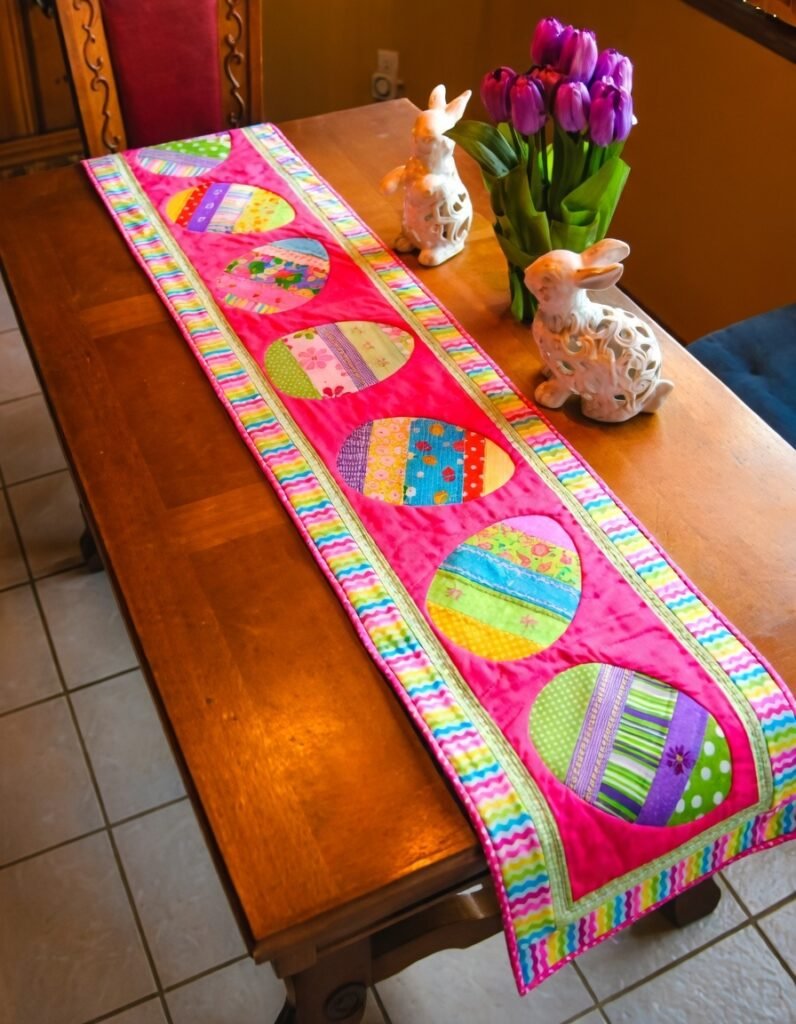
One popular idea is to use a patchwork design with Easter-themed fabrics. Combining different prints creates a vibrant and cheerful look that captures the essence of the holiday. This approach is perfect for showcasing your creativity.
Another idea is to incorporate appliqué designs. You can add shapes like bunnies, eggs, flowers, or carrots to your Easter table runner. Appliqué adds dimension and makes your design more playful and engaging.
If you prefer a minimalist style, consider using a single fabric with subtle patterns and adding decorative stitching. Simple designs can be just as elegant and are often easier to complete, especially for beginners.
You can also experiment with texture by using different fabrics such as linen, burlap, or even lace. Mixing textures adds depth and makes your Easter table runner more visually interesting.
Adding embroidery is another creative option. Hand-stitched details like flowers or Easter greetings can personalize your project and make it even more meaningful.
Lastly, consider creating a reversible table runner. By using different fabrics on each side, you can switch up your décor easily. This makes your Easter table runner more versatile and practical.
Tips for Beginners and Common Mistakes to Avoid
If you are new to sewing, learning how to make an Easter table runner is a great beginner-friendly project. However, there are a few important tips that can help you achieve better results.
Always pre-wash your fabric before starting. This prevents shrinkage later and ensures your Easter table runner maintains its shape after washing. Skipping this step is a common mistake that can affect the final result.
Take accurate measurements and double-check them before cutting. Precision is key when learning how to make an Easter table runner, as uneven pieces can make assembly difficult.
Use pins or clips to hold your fabric in place while sewing. This helps prevent shifting and keeps your seams straight. It may seem like a small step, but it makes a big difference in the final outcome.
Maintain consistent seam allowances throughout your project. Inconsistent seams can cause misalignment, making your Easter table runner look uneven.
Another common mistake is rushing the process. Take your time, especially when sewing corners and attaching binding. Careful work results in a more professional finish.
Finally, practice patience and don’t be afraid to make mistakes. Every project is a learning experience, and each Easter table runner you create will be better than the last.
FAQ About How to Make an Easter Table Runner
What is the ideal size for an Easter table runner?
The size depends on your table, but a standard width is around 30 to 40 cm, with length extending beyond the table edges by about 20 cm on each side.
Can beginners learn how to make an Easter table runner easily?
Yes, this is a beginner-friendly project. Basic sewing skills are enough to create a beautiful and functional table runner.
What type of fabric is best?
Cotton is the most recommended fabric due to its ease of use, durability, and wide range of designs.
Do I need a sewing machine?
A sewing machine is helpful but not required. You can sew your Easter table runner by hand if you prefer.
How long does it take to complete?
Depending on complexity, it can take anywhere from a few hours to a full day.
Can I wash my table runner?
Yes, especially if made with cotton. Use gentle washing to maintain its quality.
What is batting and is it necessary?
Batting is a layer that adds thickness. It’s optional but recommended for a quilted look.
Can I sell table runners I make?
Yes, handmade table runners are popular items and can be sold if you create your own design.
Conclusion
Learning how to make an Easter table runner is a rewarding and enjoyable experience that combines creativity, skill, and seasonal charm. Throughout this guide, you discovered how to choose the right materials, follow a step-by-step process, explore creative design ideas, and avoid common mistakes. Each step brings you closer to creating a beautiful piece that enhances your Easter celebrations.
A handmade Easter table runner is more than just decoration—it’s a reflection of your effort and creativity. It adds warmth to your home and makes your gatherings more special and memorable.