Card Trick Quilt Block Pattern is one of the most recognizable and visually impressive traditional quilt blocks, creating the fascinating illusion of overlapping playing cards. At first glance, this block may seem complicated, but once you understand how the individual units come together, it becomes an enjoyable and rewarding project for quilters of all skill levels.
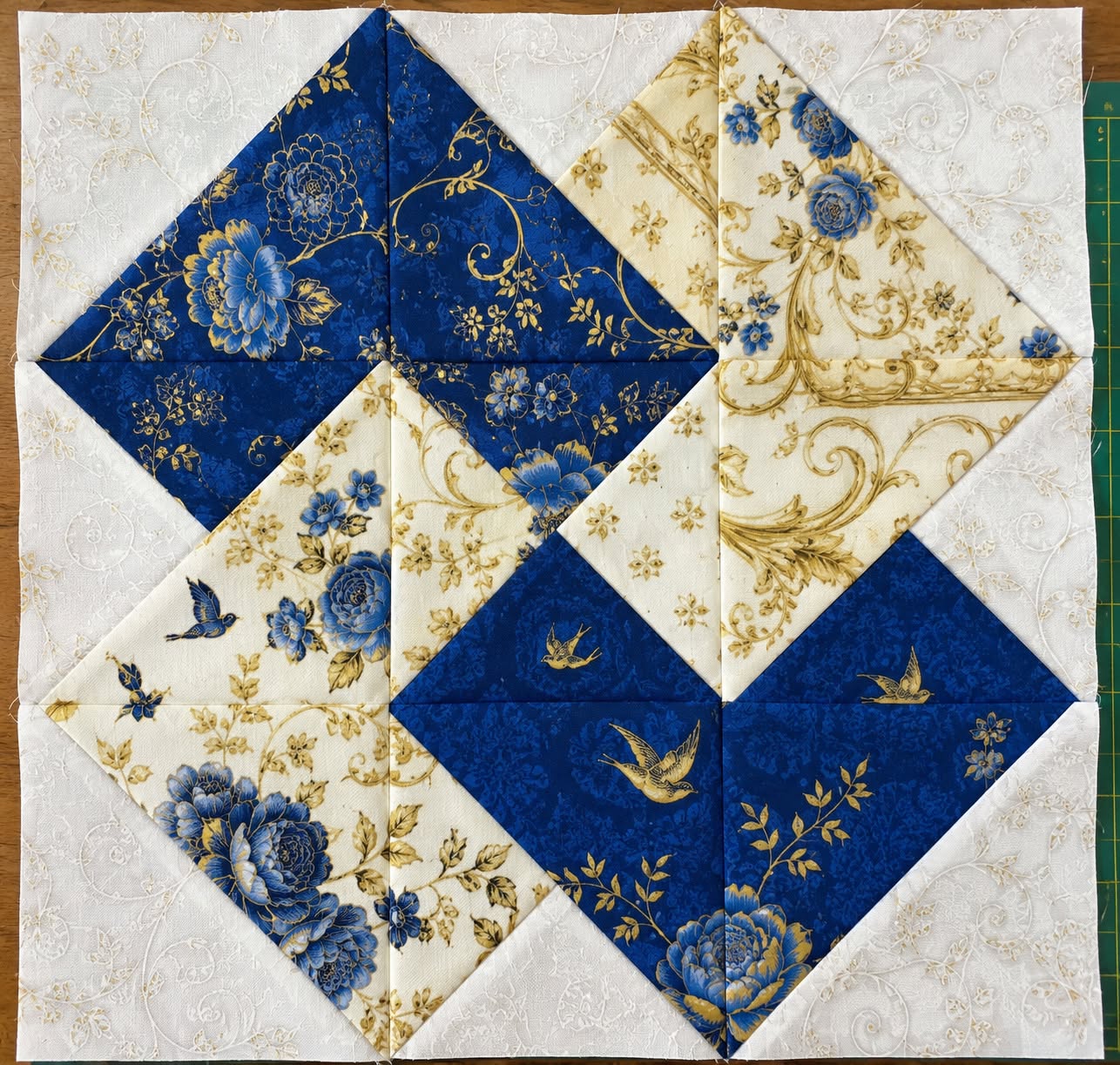
In the beautiful example shown above, the rich navy blue floral fabric, elegant ivory prints, and soft white background combine to create a sophisticated design that highlights the illusion of folded cards while adding a timeless, classic appearance. Throughout this tutorial, you will learn how to construct the Card Trick Quilt Block Pattern step by step, making it easy to recreate this stunning design with confidence.
One of the reasons the Card Trick Quilt Block Pattern has remained popular for generations is its versatility. By simply changing fabric colors and prints, you can completely transform its appearance. Bold solids create a modern geometric effect, while floral fabrics, like those featured in the example, produce a more elegant and traditional quilt block.
Holiday fabrics, batiks, reproduction prints, or seasonal collections all work beautifully with this design, allowing every quilter to personalize the finished block according to their own style and the overall theme of the quilt.
Although this block may initially appear to contain dozens of complex angles, it is actually assembled from familiar quilt units such as half-square triangles, quarter-square triangles, and squares. The secret to success lies in accurate cutting, careful pressing, and maintaining a consistent ¼-inch seam allowance throughout the project. Taking your time during each step will help the points align beautifully and preserve the striking optical illusion that makes the Card Trick Quilt Block Pattern so memorable.
Selecting Fabrics and Preparing Your Pieces
Choosing fabrics is one of the most enjoyable parts of creating the Card Trick Quilt Block Pattern. Strong contrast between the main fabrics is essential because it emphasizes the illusion of overlapping cards. The sample shown uses a deep royal blue floral print paired with a cream floral print and surrounded by a soft white background, creating outstanding visual depth.
High-quality quilting cotton is recommended because it presses well, maintains crisp seams, and allows accurate piecing. Avoid overly stretchy fabrics, as they may distort the triangle units and make precise assembly more difficult.
Before cutting, press all fabrics thoroughly to remove wrinkles. Smooth fabric allows rotary cutting tools to produce clean, accurate pieces, which directly affects the precision of the finished block.
A rotary cutter, acrylic ruler, self-healing cutting mat, fine pins or clips, and a reliable sewing machine equipped with a quarter-inch quilting foot are highly recommended. These tools help maintain consistent accuracy from beginning to end.
If this is your first time making the Card Trick Quilt Block Pattern, consider labeling each group of pieces after cutting. Since several triangle units appear similar, organization helps prevent mistakes during assembly.
Finally, choose thread that blends with both primary fabrics. A high-quality cotton or polyester thread provides durable seams while remaining nearly invisible within the finished block.
Step-by-Step Construction of the Card Trick Quilt Block Pattern
Begin by cutting all required background squares, colored squares, and triangle units according to your chosen block size. Accuracy during this stage is extremely important because even small cutting errors become noticeable once the units are joined together.
Create the half-square triangles by placing contrasting squares right sides together. Draw a diagonal line across one square, sew a quarter-inch seam on both sides of the line, then cut along the center before pressing the seams toward the darker fabric.
Construct the quarter-square triangles if your chosen pattern requires them. Carefully align the seams before stitching, ensuring that the center points meet precisely. These units help create the distinctive folded-card illusion found in the Card Trick Quilt Block Pattern.
Arrange all completed units on a design wall or flat table before sewing. This allows you to confirm that every triangle faces the correct direction. Taking a photograph can also help identify any misplaced pieces before permanent assembly.
Sew the units together row by row. Press each row carefully, alternating seam directions whenever possible so neighboring seams nest together smoothly. This technique reduces bulk and produces sharp intersections.
Once all rows are complete, join them carefully while matching every point. Press the finished block flat without stretching the fabric. At this stage, the beautiful illusion of overlapping cards should become clearly visible, showcasing the elegant geometry that makes this pattern so popular.
Color Placement and Design Tips
Color placement is what truly brings the Card Trick Quilt Block Pattern to life. Using four distinctly different fabrics creates the classic playing-card illusion, while two-color versions provide a cleaner, more modern interpretation.
The blue and cream floral fabrics featured in the example create exceptional movement because the prints remain balanced without overwhelming the geometric design. Large floral motifs add elegance while still allowing the overall block structure to remain visible.
Background fabric also plays an important role. A subtle tone-on-tone white print, like the one shown, frames the block beautifully without competing with the featured fabrics. Neutral backgrounds help the illusion stand out more dramatically.
Repeating the same block throughout an entire quilt creates fascinating secondary patterns as neighboring blocks interact with one another. Rotating individual blocks can produce completely different visual effects while using exactly the same construction method.
Scrappy versions are equally attractive. Combining multiple coordinating fabrics within each “card” creates a lively, colorful quilt while preserving the recognizable illusion of overlapping shapes.
Experiment with different color palettes before cutting fabric. Digital quilt planners or simply arranging fabric swatches together can help determine which combinations provide the strongest visual contrast.
Finishing and Quilting Your Block
After completing the Card Trick Quilt Block Pattern, trim the block to its unfinished size while preserving all seam allowances. Accurate trimming makes assembling the full quilt significantly easier.
When joining multiple blocks, pay close attention to matching corners and seam intersections. Accurate piecing during block assembly results in clean secondary patterns across the quilt top.
Choose quilting designs that complement rather than overpower the block. Straight-line quilting enhances the geometric appearance, while gentle swirls and feathers soften the overall design without distracting from the piecing.
Thread color selection can dramatically influence the final appearance. Matching thread blends into the fabrics, while contrasting thread highlights the quilting itself and adds decorative texture.
After quilting, attach the binding using a coordinating fabric that frames the quilt beautifully. A navy binding similar to the blue floral fabric shown in the example creates a polished, elegant finish.
Finally, give the completed quilt a gentle press and enjoy the remarkable optical illusion created by the Card Trick Quilt Block Pattern. Whether displayed on a bed, used as a wall hanging, or gifted to someone special, this timeless design is sure to be admired for its precision and classic beauty.
FAQ
Is the Card Trick Quilt Block Pattern suitable for beginners?
Yes. While it appears complex, beginners who are comfortable making half-square triangles and sewing with a consistent quarter-inch seam can successfully complete this block by working carefully and following the assembly order.
What fabrics work best?
High-quality quilting cotton is the preferred choice because it provides stability, accurate pressing, and crisp seam intersections.
Why is it called the Card Trick block?
The arrangement of colored triangle units creates the illusion of overlapping playing cards, giving the block its traditional name.
How important is color contrast?
Very important. Strong contrast between neighboring fabrics creates the three-dimensional effect that defines the pattern.
Can I use scraps?
Absolutely. Scrappy versions are very popular and produce colorful, unique quilts while preserving the recognizable optical illusion.
What is the most difficult part of the block?
Maintaining accurate seam allowances and carefully orienting each triangle unit during layout are usually the biggest challenges.
How should I quilt this block?
Straight-line quilting emphasizes the geometric design, while free-motion feathers or swirls provide a softer, more traditional appearance.
Can I make an entire quilt using this block?
Yes. The Card Trick Quilt Block Pattern is commonly repeated throughout full-size quilts, table runners, wall hangings, pillows, and baby quilts.
Conclusion
The Card Trick Quilt Block Pattern is a timeless quilt design that combines precision piecing with an eye-catching optical illusion, making it one of the most rewarding traditional blocks to sew. Throughout this tutorial, you learned how to select fabrics, prepare accurate units, assemble the block step by step, position colors for maximum visual impact, and finish your quilt with confidence. The elegant blue, cream, and white combination shown in the sample demonstrates how thoughtful fabric selection can transform a classic pattern into a truly sophisticated work of art.
VIDEO TUTORIAL
With patience, careful cutting, and consistent stitching, you can confidently recreate this beautiful quilt block and incorporate it into quilts, pillows, runners, or wall hangings that will be treasured for years to come. If you enjoyed this tutorial, please leave your honest opinion and share your suggestions for future quilt block tutorials. Your feedback helps inspire even more creative quilting projects for the community.