3D Crochet Flower with Three Colors projects have become one of the most creative and visually stunning crafts in the crochet world. These textured floral designs stand out because of their depth, detail, and the harmony of hues that bring them to life.
Creating these flowers is not just about following a pattern—it’s about playing with color, texture, and shape. The layering effect of petals in three different shades gives your design a sculptural quality. You can use these flowers to decorate hats, blankets, bags, or even as stand-alone embellishments for home décor.
Mastering the 3D crochet flower with three colors technique can seem complex at first, but with patience and creativity, anyone can do it. The process involves combining foundational stitches with color changes at strategic points to build up layers.
Understanding the Basics of 3D Crochet Flowers
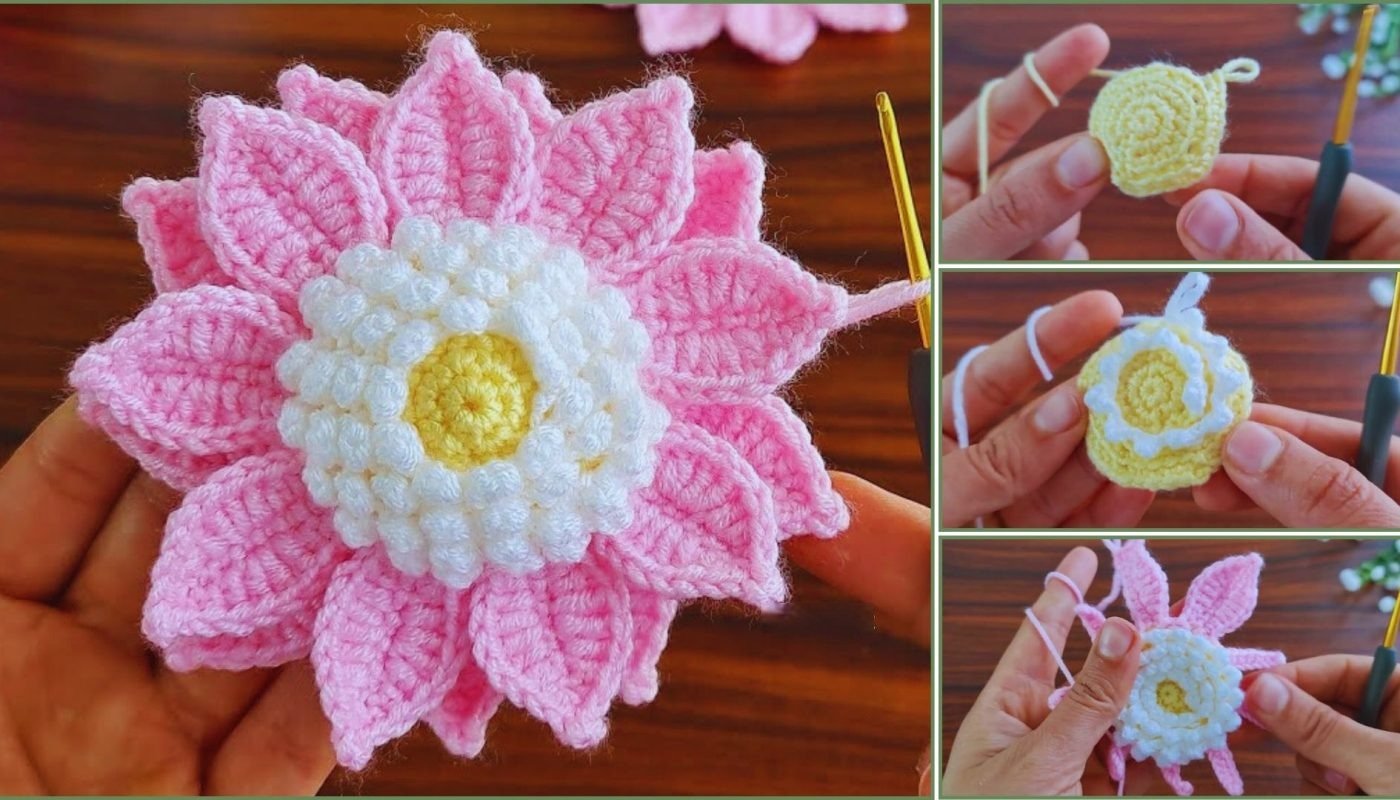
Before diving into advanced color combinations, it’s important to understand how a 3D crochet flower with three colors is structured. Each flower usually starts with a center ring made from a simple chain and slip stitch. From there, the petals are built outward using different stitches like double crochet, treble crochet, and half double crochet. These stitches give the petals varying heights, which help form the 3D appearance.
The use of three colors is what makes these flowers particularly striking. Typically, one color is used for the center, another for the inner petals, and a third for the outer petals. This creates a natural-looking gradient that mimics how real flowers transition in shade. Choosing complementary or contrasting colors can completely change the mood of your piece, allowing for endless artistic expression.
When selecting yarn, opt for high-quality cotton or acrylic blends. These hold their shape well and give your petals crisp definition. A medium-weight yarn works best for maintaining structure without being too bulky. The right hook size—usually 3.5 mm to 5 mm—will depend on the yarn thickness and desired petal size.
Another essential tip is to keep your tension consistent throughout. Uneven tension can cause your petals to warp or your flower to lose symmetry. Practice on smaller flowers first until you’re comfortable with your hand movements and yarn control. Once you’ve mastered this, you’ll find that each flower becomes easier and more uniform.
Experimenting with stitch patterns can also enhance your designs. Try mixing stitches with different heights or adding picot edges for texture. Each variation gives your 3D crochet flower with three colors a unique touch that reflects your personal style. The key is to balance structure and softness so your flower looks full but not stiff.
Finally, remember that blocking your finished flower can help it keep its shape. Gently dampen it and pin it flat on a soft surface to dry. This step ensures your petals remain well-formed and beautifully layered, ready to be used as decoration or sewn onto your favorite projects.
Choosing and Combining the Perfect Colors
Color selection is the heart of any 3D crochet flower with three colors design. The shades you choose can completely transform the outcome, making it look soft and romantic or bold and dramatic. Start by selecting a base color for the flower’s center. This should be the most dominant shade, often a bright or dark tone that contrasts with the petal colors.
The second color should complement the center and form the inner petals. This is where you can play with mid-tones—something that bridges the center and outer layers. For example, if your center is yellow, try orange or coral for the inner petals. The outermost petals, crocheted with the third color, can be lighter or darker to frame the entire flower elegantly.
Understanding color theory helps you create harmony. Triadic color schemes (three colors equally spaced on the color wheel) can yield vibrant combinations, while analogous schemes (colors next to each other on the wheel) produce softer, more natural effects. Try mixing pastel tones for a delicate look or jewel tones for a luxurious feel.
Using a gradient of shades within the same color family also adds depth. For example, using light pink, medium pink, and burgundy can make your 3D crochet flower with three colors appear realistic and lush. The trick is to let the colors transition smoothly from one layer to another.
When crocheting, plan your color changes carefully. Carry the unused yarn behind your stitches neatly to avoid tangles and bumps. Alternatively, you can cut and weave in each color separately, though this may take more time. Always secure the yarn ends firmly to prevent unraveling later.
Lastly, consider where you’ll use your flower. If it’s for a garment, choose colors that complement the outfit. For home décor, pick tones that match your interior palette. The flexibility of color choice is what makes this project endlessly customizable and enjoyable.
Step-by-Step: Making a 3D Crochet Flower with Three Colors
Let’s walk through the general steps of making a 3D crochet flower with three colors. You can adapt these steps to fit any pattern you prefer, but the basic principles remain the same. Begin with your first color to create the center. Chain four and join with a slip stitch to form a ring. Into that ring, crochet several double crochets to form a tight circular base—usually around 10 to 12 stitches.
Next, switch to your second color to begin the inner petals. Chain three, then work a series of double crochets into the same stitch to form the petal shape. Skip one stitch, then slip stitch into the next to anchor the petal. Repeat this process around the circle. You should end up with about five or six petals forming the first layer.
For the outer layer, attach your third color to the back loops of the previous round. This helps the new petals sit behind the first set, giving the 3D layered look. Create slightly larger petals using taller stitches like treble crochet. The contrast in size adds dimension and makes the flower “pop.”
As you work, shape the petals gently with your fingers to define them. Don’t worry if they curl slightly—that’s part of the charm of 3D crochet. Once all petals are complete, weave in the loose ends with a tapestry needle. Trim any excess yarn carefully for a clean finish.
Creative Ways to Use Your 3D Crochet Flowers
Once you’ve mastered making a 3D crochet flower with three colors, there are countless ways to use your creations. These flowers can be attached to almost any handmade project to add a personal and decorative flair. The most common use is as embellishments on accessories such as hats, scarves, or bags. A single 3D flower can turn a plain accessory into a statement piece.
You can also use them in home décor. Attach them to pillow covers, table runners, or wall hangings for a cozy handmade touch. They look especially beautiful when combined into a floral garland or bouquet, creating a long-lasting arrangement that never wilts.
Another popular idea is to use 3D flowers in gift wrapping or as brooches. Attach a pin backing and you’ll have a charming handmade accessory that can be worn or gifted. These little details show care and creativity, making any present extra special.
FAQ About 3D Crochet Flowers with Three Colors
Q1: What type of yarn is best for 3D crochet flowers?
A: Medium-weight cotton or acrylic yarn works best. Cotton provides structure, while acrylic is soft and versatile. Choose yarns with good stitch definition for crisp petals.
Q2: Can beginners make 3D crochet flowers with three colors?
A: Absolutely! Start with simple patterns and smaller projects. Once you get comfortable with color changes and petal shaping, you can move on to more complex designs.
Q3: How can I keep my flower’s shape?
A: Blocking helps maintain structure. Gently dampen the flower, shape it with your hands, and let it dry flat. You can also stiffen it slightly with fabric spray if desired..
Conclusion
Creating a 3D crochet flower with three colors is a delightful journey that blends skill, color theory, and imagination. From choosing the perfect shades to mastering petal formation, each step allows you to express creativity and craft beauty by hand. With practice, you can turn simple yarn into vibrant blossoms that enhance any project.