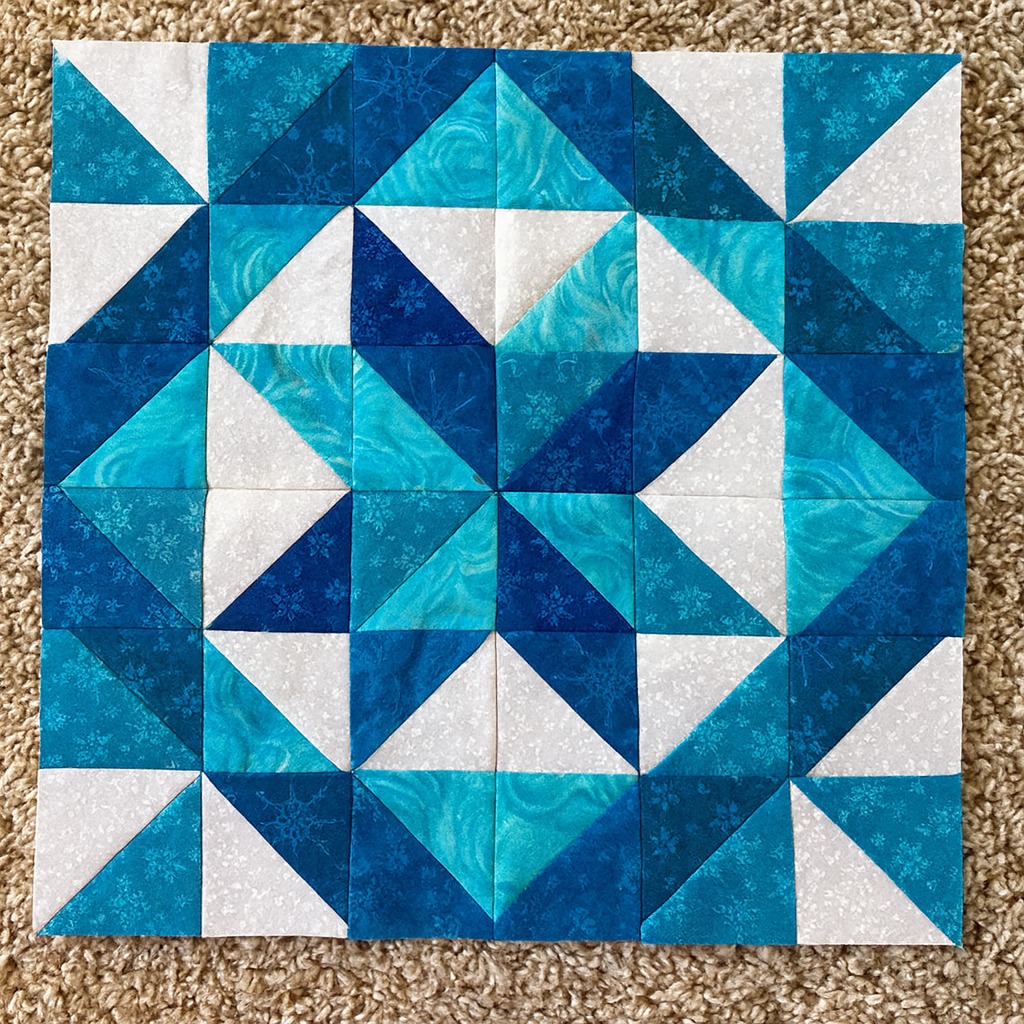
Attic Window Quilt Pattern is a timeless quilting design that creates the illusion of looking through a three-dimensional window, showcasing beautiful focal fabrics as if they were scenes beyond a frame. The Attic Window Quilt Pattern is admired for its visual depth, classic elegance, and creative flexibility, making it a favorite among quilters who enjoy combining precision with artistic expression.
What makes the Attic Window Quilt Pattern so special is its ability to transform simple fabric pieces into a dramatic optical effect. By carefully arranging light and dark fabrics, quilters create the impression of shadows and perspective, giving the quilt a sophisticated architectural look.
In this in-depth article, you will learn everything you need to know about the Attic Window Quilt Pattern, including its design concept, fabric selection, construction methods, layout options, and finishing tips.
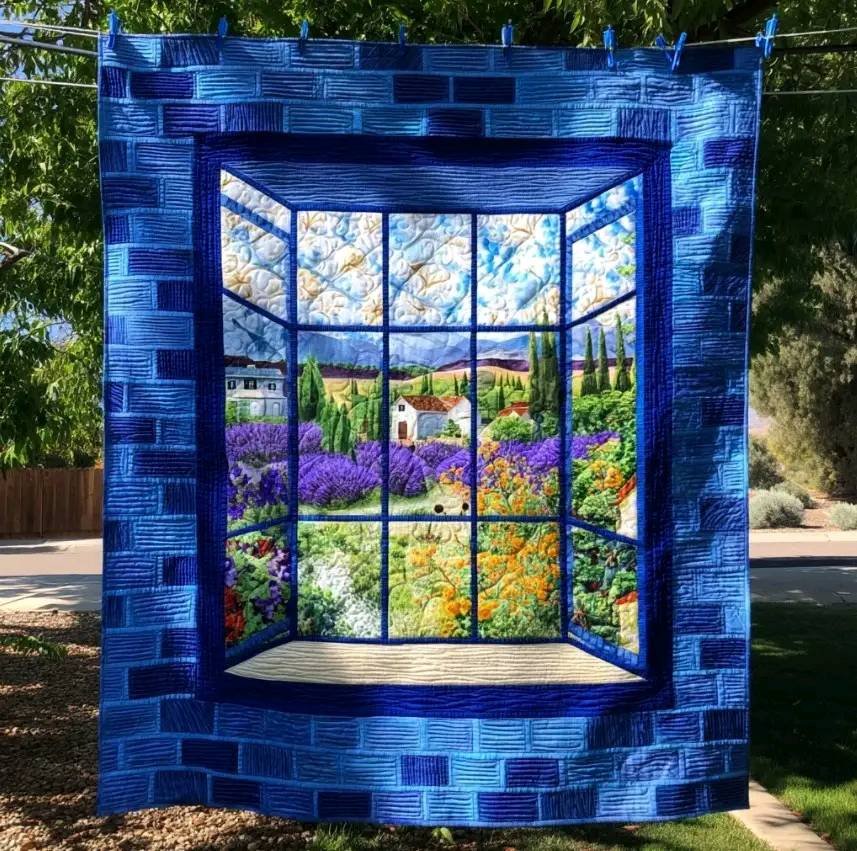
Understanding the Design Concept of the Attic Window Quilt Pattern
The Attic Window Quilt Pattern is based on a clever use of geometry and color contrast to create a three-dimensional illusion.
At its core, the pattern features a central square that represents the “view” through the window. This focal fabric is often a scenic print, floral design, or themed motif.
Surrounding the center are two contrasting fabric strips that simulate light and shadow. These strips form the “window frame” and give the block its depth.
The placement of light fabric on one side and dark fabric on the other is what makes the Attic Window Quilt Pattern appear three-dimensional.
This illusion works best when the contrast between fabrics is clear and intentional.
Understanding this visual concept is essential before cutting or sewing, as it determines the overall success of the Attic Window Quilt Pattern.
Fabric Selection and Color Planning for an Attic Window Quilt Pattern
Fabric choice plays a crucial role in the effectiveness of the Attic Window Quilt Pattern.
The center fabric should be eye-catching and meaningful, as it becomes the focal point of each block. Many quilters choose themed panels or large-scale prints.
For the frame, selecting one light fabric and one dark fabric is essential to create the illusion of depth.
Neutral shades such as cream, gray, beige, or soft pastels often work well for the lighter side.
Darker tones like navy, deep green, charcoal, or brown are commonly used for the shadow side.
Consistency across the quilt is important. Using the same light and dark fabrics throughout enhances the realism of the Attic Window Quilt Pattern.
Thoughtful fabric and color planning ensures that the illusion remains strong and visually appealing.
Cutting and Preparation Techniques
Accurate cutting is especially important when working with the Attic Window Quilt Pattern.
Each block typically consists of a central square and two rectangular frame pieces.
Precision ensures that the angles align correctly and that blocks fit together seamlessly.
Many quilters prefer using rotary cutters and rulers for clean, straight edges.
Labeling fabric pieces during cutting helps avoid confusion, especially when working with multiple blocks.
Pre-cutting all components before sewing can improve efficiency and consistency.
Good preparation sets the foundation for a successful Attic Window Quilt Pattern project.
Construction Methods of the Attic Window Quilt Pattern
The construction of the Attic Window Quilt Pattern follows a logical and repetitive process.
Each block begins by attaching the light frame piece to one side of the center square.
The dark frame piece is then attached to the adjacent side, forming a corner that suggests depth.
Pressing seams carefully is crucial to maintain clean lines and sharp corners.
Blocks are assembled one at a time, allowing for consistent quality control.
Some variations use mitered corners, while others rely on simple straight seams.
Understanding these construction methods makes the Attic Window Quilt Pattern more approachable and enjoyable.
Layout Options and Block Arrangement
One of the strengths of the Attic Window Quilt Pattern is its versatility in layout.
Blocks can be arranged in straight rows for a structured, formal appearance.
Rotating blocks strategically can enhance the illusion of depth across the entire quilt.
Some layouts create the impression of a single large window made up of many smaller views.
Spacing between blocks can be adjusted with sashing to create a more open design.
Borders can be added to frame the quilt and reinforce the window theme.
Experimenting with layout options allows the Attic Window Quilt Pattern to feel unique and personalized.
Skill Level and Learning Curve
The Attic Window Quilt Pattern is often considered an intermediate-level design, but it can be adapted for beginners.
The main challenge lies in accurate cutting and consistent seam allowances.
Once the construction process is understood, the repetitive nature of the blocks becomes comfortable and enjoyable.
Beginners can start with fewer blocks or larger pieces to simplify the project.
More experienced quilters may enjoy experimenting with complex layouts or advanced techniques.
The pattern offers a satisfying learning curve for anyone interested in developing precision and design awareness.
This adaptability makes the Attic Window Quilt Pattern accessible to a wide range of quilters.
Creative Variations of the Attic Window Quilt Pattern
The classic Attic Window Quilt Pattern has inspired countless creative variations.
Some designs use curved seams instead of straight lines for a softer look.
Others incorporate multiple focal fabrics within a single block.
Modern interpretations may use bold colors and minimal contrast for a contemporary feel.
Seasonal or themed fabrics can turn the quilt into a storytelling piece.
Scrap quilting versions allow quilters to use leftover fabrics creatively.
These variations keep the Attic Window Quilt Pattern fresh and endlessly inspiring.
Choosing the Right Quilt Size
The size of your quilt affects both its impact and usability.
Small versions of the Attic Window Quilt Pattern work well as wall hangings or table toppers.
Lap quilts are popular for showcasing themed focal fabrics.
Larger quilts require careful planning to maintain visual balance.
Scaling block size up or down allows flexibility in overall dimensions.
Selecting the right size ensures that the Attic Window Quilt Pattern fits its intended purpose.
Thoughtful sizing contributes to a harmonious final result.
Quilting and Finishing Techniques
Quilting enhances the depth and texture of the Attic Window Quilt Pattern.
Straight-line quilting emphasizes the geometric structure.
Echo quilting around the window frames adds dimension.
Free-motion quilting can add softness and artistic flair.
Binding choices should complement the frame fabrics without distracting from the design.
Proper finishing ensures durability and a polished appearance.
These techniques bring the Attic Window Quilt Pattern to life.
Common Mistakes to Avoid
Certain mistakes can affect the effectiveness of the Attic Window Quilt Pattern.
Insufficient contrast between light and dark fabrics weakens the illusion.
Inaccurate cutting can cause blocks to misalign.
Inconsistent seam allowances may distort the window shape.
Poor pressing can lead to bulky seams.
Rushing the layout process can result in visual imbalance.
Avoiding these issues helps achieve a clean and professional-looking Attic Window Quilt Pattern.
Why the Attic Window Quilt Pattern Remains Popular
The enduring popularity of the Attic Window Quilt Pattern lies in its visual impact and creative flexibility.
It transforms simple blocks into a dramatic illusion.
It highlights special fabrics in a meaningful way.
It balances tradition with artistic expression.
It offers both challenge and satisfaction.
These qualities make the Attic Window Quilt Pattern a beloved choice across generations of quilters.
FAQ – Attic Window Quilt Pattern
Is the Attic Window Quilt Pattern suitable for beginners?
Yes, with careful cutting and planning, beginners can successfully complete it.
What fabrics work best for this pattern?
High-contrast light and dark fabrics paired with a bold focal fabric work best.
Do I need special tools?
Basic quilting tools such as a rotary cutter, ruler, and sewing machine are sufficient.
Can I use scrap fabric?
Yes, scraps work well, especially for the center squares.
What size quilt is best for a first project?
A small wall hanging or lap quilt is ideal for beginners.
Does this pattern require advanced quilting skills?
No, basic piecing skills are sufficient.
Conclusion
The Attic Window Quilt Pattern is a stunning example of how fabric, color, and geometry can come together to create a powerful visual illusion. Throughout this article, we explored its design concept, fabric selection, construction methods, layout options, creative variations, and finishing techniques.
By understanding the principles behind the Attic Window Quilt Pattern, you can confidently create quilts that are elegant, meaningful, and visually striking. This pattern rewards patience and planning while offering endless opportunities for creativity.