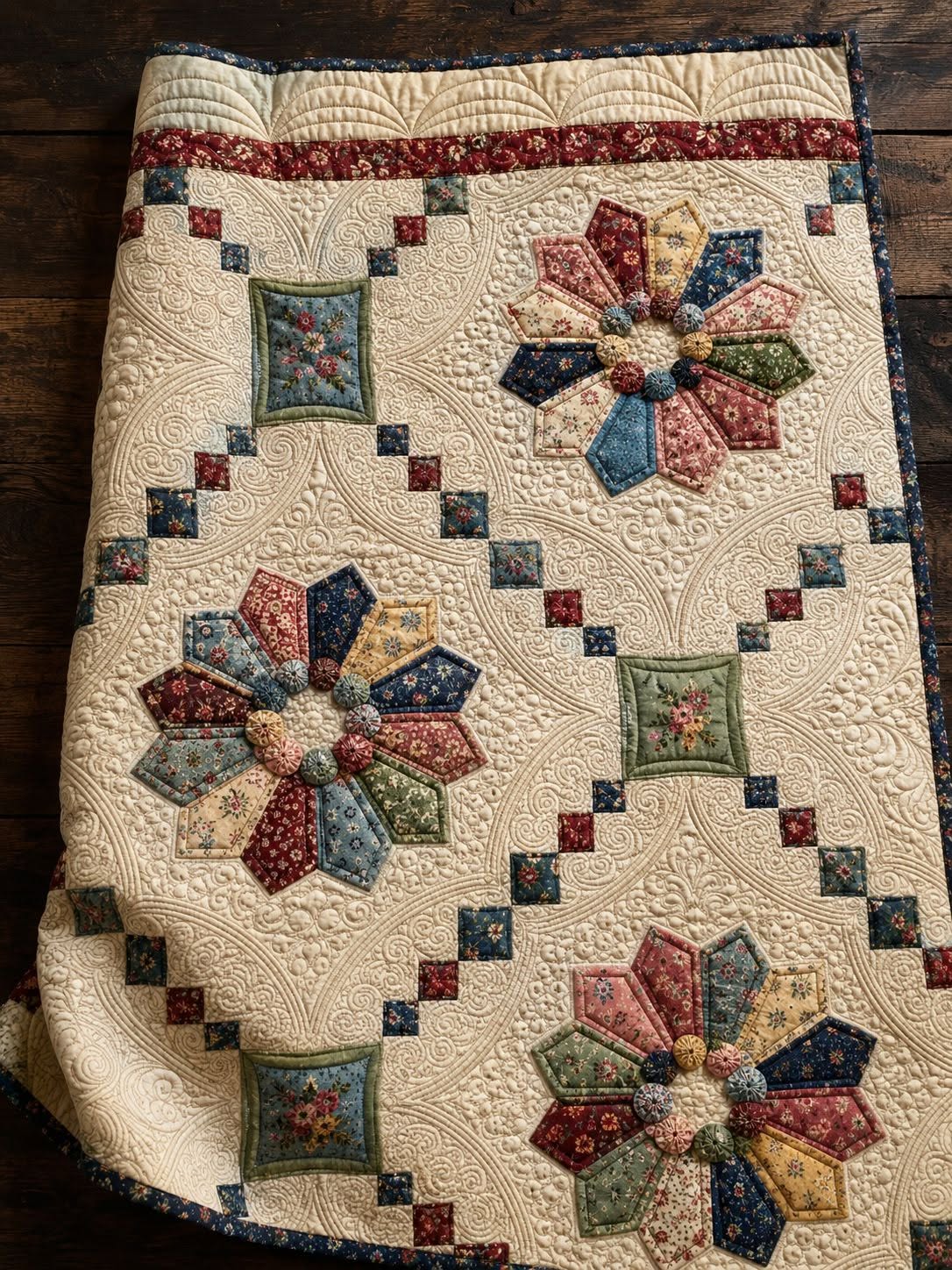
Dresden Plate Quilt Pattern is one of the most iconic and elegant designs in quilting, admired for its graceful flower-like appearance and timeless charm. Created by arranging multiple fabric blades into a circular shape, the Dresden Plate Quilt Pattern has remained a favorite among quilters for generations. Whether made with vintage floral prints, colorful scraps, modern solids, or coordinated fabric collections, this classic block can be adapted to suit nearly any quilting style. The finished design resembles a blooming flower, making it an eye-catching centerpiece for quilts, pillows, wall hangings, table runners, and many other patchwork projects.
One of the reasons the Dresden Plate Quilt Pattern continues to be so popular is its incredible versatility. The same construction method can produce countless variations simply by changing the number of blades, their width, the fabric selection, or the center circle. Traditional quilts often feature soft florals and delicate pastel colors, while modern interpretations use bold geometric prints or high-contrast solids for a fresh contemporary look. Because each blade is sewn individually before being joined into a circle, the project is enjoyable to complete step by step, allowing quilters to appreciate the gradual transformation from small fabric pieces into a stunning floral design.
Creating a Dresden Plate quilt block is also an excellent way to improve quilting skills. The project encourages accurate cutting, consistent seam allowances, careful pressing, curved appliqué techniques, and thoughtful color placement. Although the finished block appears detailed, the construction becomes straightforward when divided into manageable stages. This complete guide explains everything you need to know about selecting fabrics, preparing the blades, assembling the plate, attaching the center, finishing the quilt, and exploring creative variations while maintaining beautiful, accurate results.
Choosing Fabrics, Colors, and Materials for a Dresden Plate Quilt
The first step in creating a beautiful Dresden Plate Quilt Pattern is selecting fabrics that complement one another while allowing each blade to stand out. Quilting cotton is the most popular choice because it is stable, easy to press, and available in an enormous variety of colors and prints. Using fabrics with similar weights helps every blade behave consistently during piecing and pressing.
Many quilters enjoy making a scrappy Dresden Plate quilt by using a different fabric for every blade. This approach creates a lively, colorful flower with plenty of visual interest. Others prefer a coordinated fabric collection featuring similar colors or prints, creating a more elegant and balanced appearance. Both approaches produce beautiful results, and the choice depends entirely on your personal style.
Traditional Dresden Plate quilts often feature soft florals, vintage-inspired prints, and delicate pastel shades such as pink, lavender, cream, pale blue, and sage green. These fabrics emphasize the floral nature of the design and create a timeless look. Modern versions frequently incorporate bold solids, bright colors, black-and-white combinations, or low-volume prints for a contemporary interpretation.
Color value plays an important role in the finished block. Combining light, medium, and dark fabrics creates depth and helps define the individual blades. If every fabric has a similar value, the circular flower may appear flat. Thoughtful contrast gives the Dresden Plate quilt block greater dimension and visual impact.
Essential quilting tools include a rotary cutter, self-healing cutting mat, acrylic quilting ruler, sewing machine, coordinating thread, pins or clips, iron, ironing board, fabric marking tools, and a quarter-inch presser foot. Many quilters also use a Dresden template ruler, which simplifies cutting identical blades and improves overall accuracy.
Before cutting fabric for an entire quilt, create a sample blade and test its size. This allows you to confirm the seam allowance, pressing method, and finished proportions before preparing all the remaining pieces. A practice blade can save both fabric and time while improving the consistency of the completed quilt.
Cutting and Sewing the Dresden Plate Blades
The distinctive beauty of the Dresden Plate Quilt Pattern comes from its repeated blades. Begin by cutting each blade accurately using a template or ruler. Consistency is essential because even slight differences in width or length can affect the completed circle. Take your time during this stage, as precise cutting simplifies every step that follows.
After cutting, fold each blade with the right sides together and sew across the wider outer edge. This seam creates the pointed or rounded tip, depending on the chosen design. Trim the seam allowance carefully and turn the blade right side out. Use a blunt turning tool if necessary to shape the point without damaging the fabric.
Press each blade individually before continuing. Carefully center the seam on the back of the blade so the front remains symmetrical. Accurate pressing helps every blade match the others and allows the completed Dresden Plate quilt block to lie flat.
Once all blades are prepared, begin joining them together along the long side edges. Sew one blade to the next using a consistent quarter-inch seam allowance. Continue adding blades until the complete ring is formed. Check the alignment regularly to ensure the circle remains balanced and smooth.
As the circle grows, press each seam carefully. Some quilters prefer pressing seams open to reduce bulk, while others press them to one side for additional stability. Either method can work successfully as long as it is used consistently throughout the project.
After the final seam joins the first and last blades together, gently smooth the completed Dresden Plate. The circle should lie relatively flat without excessive rippling or gaps. Minor adjustments can usually be corrected during the appliqué stage, but significant distortion may indicate inconsistent seam allowances or blade sizes.
Attaching the Dresden Plate and Completing the Quilt
With the plate assembled, the next step is positioning it on the background fabric. Place the completed Dresden Plate Quilt Pattern on a pressed background square and adjust the placement until the flower appears centered. Measure from several directions if necessary to ensure balanced positioning before securing it.
The plate may be attached using a variety of appliqué methods. Hand appliqué offers a traditional appearance with nearly invisible stitches, while machine appliqué provides durability and efficiency. Whichever technique you choose, keep the stitches neat and consistent around each blade edge.
After securing the outer edges, prepare the center circle. The center can be made from a contrasting solid, floral print, fussy-cut motif, or coordinating fabric. The circle covers the inner blade edges while creating the visual center of the flower. Position it carefully before stitching it securely in place.
When several Dresden Plate quilt blocks have been completed, arrange them on a design wall or large flat surface. Experiment with different layouts before sewing the blocks together. Sashing, cornerstones, or alternating plain blocks can create additional visual interest while allowing each Dresden Plate to stand out.
Once satisfied with the arrangement, sew the blocks into rows using consistent seam allowances. Join the rows carefully, matching intersections where necessary. Press the completed quilt top thoroughly before preparing the batting and backing for quilting.
Choose a quilting design that complements the floral appearance of the Dresden Plate. Echo quilting around the petals, gentle curves, feather motifs, or simple straight-line quilting all work beautifully. Finish the quilt by trimming the edges and attaching quilt binding for a polished, durable finish.
Creative Variations, Helpful Tips, FAQ, and Conclusion
One of the most enjoyable aspects of the Dresden Plate Quilt Pattern is its adaptability. Increasing or decreasing the number of blades changes the overall appearance of the flower. Narrow blades create a delicate, detailed design, while wider blades produce a bold, dramatic look.
Scrap quilts are especially popular with Dresden Plate blocks. Using a different fabric for every blade creates wonderful variety while allowing treasured fabric remnants to become part of a meaningful project. A neutral background often helps unify the colorful collection.
Modern interpretations frequently combine oversized plates with negative space. Large background areas emphasize the elegant circular design while providing room for decorative quilting. Bold solids, geometric prints, and unexpected color combinations can completely transform this historic block.
A single Dresden Plate quilt block can also become a pillow cover, wall hanging, tote bag panel, table runner, or decorative centerpiece. Smaller projects provide an excellent opportunity to practice the construction process before committing to a full-sized quilt.
Accurate pressing remains one of the keys to success. Press every blade individually before assembly, then press each seam as the circle grows. Consistent pressing helps the finished plate remain smooth and symmetrical.
Most importantly, enjoy the process. The Dresden Plate Quilt Pattern rewards patience and careful craftsmanship. Watching individual blades gradually become a beautiful floral quilt block is one of the most satisfying experiences in patchwork.
Conclusion
The Dresden Plate Quilt Pattern remains one of quilting’s most elegant and recognizable designs. By carefully selecting fabrics, accurately cutting blades, assembling the circular flower, attaching the center, and finishing the quilt with thoughtful quilting, you can create a timeless project that celebrates both tradition and creativity.
VIDEO TUTORIAL
Throughout this guide, you learned how to choose fabrics, understand color value, prepare and sew Dresden blades, assemble the plate, appliqué the flower, arrange multiple blocks, quilt the finished project, and explore creative variations for quilts and smaller decorative items.