The Maple Leaf Quilt Block Pattern is one of the most charming and recognizable quilt designs used by both beginners and advanced quilters around the world. Known for its symbolic connection to nature, seasons, and tradition, this pattern brings warmth and personality to any quilt project.
One of the reasons this block is so beloved is its combination of simplicity and visual impact. Even though it looks intricate, it is constructed from basic shapes, making it friendly for beginners. At the same time, experienced quilters enjoy its potential for color play and creative arrangements.
Learning how to use the Maple Leaf Quilt Block Pattern is not just about sewing—it’s also about understanding design balance, color selection, seam accuracy, and block layout. By mastering this classic block, you build essential quilting skills that apply to countless other designs.
Understanding the Maple Leaf Quilt Block Pattern
The Maple Leaf Quilt Block Pattern is traditionally built using squares, half-square triangles, and simple piecing techniques. This makes it ideal for quilters who want to practice accuracy and consistent seam allowances. You can use either precut fabrics or scraps, which helps make the block economical and beginner-friendly. Because the shapes are simple, quilters can focus more on fabric selection and layout than on complicated construction steps.
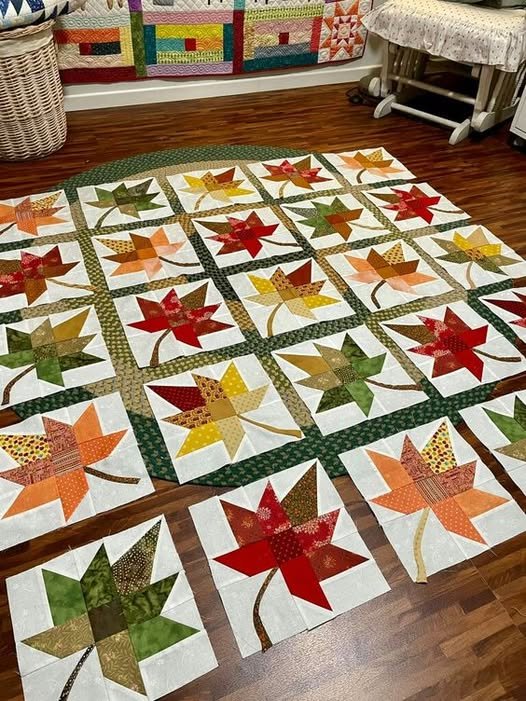
Another important aspect of this pattern is its symbolism. For many quilters, the maple leaf represents change, growth, and the beauty of nature. This symbolism is often highlighted through warm seasonal colors like oranges, reds, and browns. However, the block can also be modernized using unexpected shades like navy, teal, soft pastels, or monochrome palettes. Changing the colors transforms the feeling of the block entirely.
The block’s layout is naturally dynamic because the triangles create directional movement. This makes it ideal for creative quilt arrangements. Some quilters rotate the blocks to form swirling patterns, while others keep them aligned for a structured, organized look. The Maple Leaf Quilt Block Pattern also works beautifully when combined with solid blocks, sashing, or negative space.
Beginners appreciate that this pattern helps develop confidence with half-square triangles (HSTs). These small units are foundational in quilting, and learning to sew them accurately will serve quilters well in almost all future projects. The block also teaches pressing techniques that reduce bulk and help the quilt top lay flat, which is essential for professional results.
Another reason the Maple Leaf Quilt Block Pattern is popular is that it scales easily. You can create small blocks for miniature quilts or large blocks for fast, bold designs. This makes the pattern adaptable to many project types. Even when enlarged, the block keeps its crisp shape and striking visual appeal, making it ideal for modern quilt styles.
Finally, this block is a perfect choice for gifts. Quilts featuring maple leaves are often created for fall celebrations, nature lovers, or even as memory quilts. The leaf symbolizes warmth and nostalgia, making any handmade piece extra meaningful.
Choosing Fabrics and Colors for a Maple Leaf Quilt
Selecting the right fabrics can elevate your Maple Leaf Quilt Block Pattern from simple to stunning. Traditional quilts feature warm autumn hues like burnt orange, deep red, mustard yellow, and earthy brown. These colors naturally complement the leaf design and create a cozy, seasonal atmosphere. However, modern fabric choices can completely transform the pattern into something sleek and contemporary.
When choosing fabrics, consider using prints that enhance movement and texture. Subtle tone-on-tone prints, for example, add depth without overwhelming the block’s shape. Small floral prints or geometric patterns can bring a unique charm to your maple leaf design. On the other hand, solids or near-solids make the leaf shape crisp and striking, ideal for minimalistic quilts.
Contrast is essential when selecting fabrics for this pattern. The leaf shape should clearly stand out from the background, so choose light backgrounds for dark leaves or vice versa. High contrast ensures the block remains visually distinct, especially when viewed from a distance. This helps the quilt maintain strong visual structure.
Fabric texture and quality also matter. Using 100% cotton quilting fabric is the best option because it is stable, durable, and easy to sew. Prewashing fabrics can prevent color bleeding, which is especially important when using deep autumn shades. Batiks are another excellent choice for the Maple Leaf Quilt Block Pattern, as they offer rich colors and unique texture variations.
Techniques for Sewing a Maple Leaf Quilt Block
Sewing the Maple Leaf Quilt Block Pattern begins with accurate cutting. Because the block is constructed from squares and half-square triangles, precise measurements are essential for a clean and professional finish. Using a rotary cutter, acrylic ruler, and self-healing mat ensures accuracy and consistency across multiple blocks.
Half-square triangles (HSTs) are a fundamental element of this pattern. Most quilters use the two-at-a-time method to create them. This technique is efficient and helps maintain accuracy. Pressing the seams correctly—either open or to the side—will help reduce bulk, especially at block intersections. Consistent seam allowances of 1/4 inch are critical to ensuring the block finishes at the correct size.
Chain piecing is another helpful technique that speeds up the process when making multiple blocks. By sewing similar units consecutively, you reduce fabric handling and save time. After chain piecing, pressing the units neatly keeps the block components flat and easy to assemble.
Once all the pieces are prepared, layout becomes important. Arranging the squares and triangles in the correct orientation ensures that the leaf shape forms properly. Taking a moment to double-check placement reduces errors during sewing. Many quilters keep a reference image nearby to avoid mistakes.
Assembling the block usually involves sewing rows together before joining them into the final square. Pressing the seams between rows helps align intersections and keeps the block crisp. A well-pressed quilt block not only looks better but also makes the final quilting process smoother.
Creative Uses for the Maple Leaf Quilt Block Pattern
The Maple Leaf Quilt Block Pattern offers endless creative possibilities beyond full-size quilts. Many quilters enjoy using this block for fall-themed home décor projects such as table runners, placemats, and wall hangings. These smaller items are perfect for seasonal decorating and make thoughtful handmade gifts.
Another popular use is incorporating the block into throw pillows. A single maple leaf centered on a pillow cover creates a striking autumn accent for sofas, chairs, or beds. Quilted pillow covers also allow quilters to practice the block on a small scale before committing to a larger quilt project.
Maple leaf blocks also work beautifully in sampler quilts. Because the block has a traditional design, it pairs well with other classic blocks such as log cabins, churn dashes, and flying geese. Sampler quilts allow quilters to experiment with different color combinations while maintaining a cohesive and harmonious look.
For modern quilters, using oversized maple leaf blocks can create dramatic and minimalist quilt designs. Enlarging the block makes it easier to showcase bold prints, solid colors, and contemporary quilting styles. Large blocks also sew together quickly, making them ideal for beginners who want a fast and rewarding project.
FAQ About the Maple Leaf Quilt Block Pattern
1. Is the Maple Leaf Quilt Block Pattern good for beginners?
Yes, it is an excellent beginner-friendly pattern because it uses simple shapes like squares and half-square triangles. With practice and careful cutting, beginners can achieve great results.
2. What size should a maple leaf block be?
A common size is 12 inches finished, but the block can be scaled up or down depending on the project. Larger blocks are easier for beginners, while smaller ones require more precision.
3. What fabrics work best for this pattern?
100% quilting cotton is the best choice for clean seams and durability. Solid colors, tone-on-tone prints, batiks, and small-scale patterns all work beautifully.
4. How do I choose colors for a maple leaf quilt?
Traditional fall colors create a warm look, while modern palettes such as teal, navy, or pastels offer a fresh twist. Contrast is essential to make the leaf shape stand out.
Conclusion
The Maple Leaf Quilt Block Pattern remains a timeless favorite among quilters for its beauty, versatility, and symbolic connection to nature. In this article, we explored its construction, fabric choices, sewing techniques, and creative applications. Whether you are a beginner or an experienced quilter, this classic block offers countless opportunities for artistic expression. If you enjoyed this guide, feel free to leave a sincere opinion or suggestions about what quilting topic you would like to explore next.