Log Cabin Quilt Block Pattern is one of the most beloved and recognizable quilt designs in the world. Known for its geometric beauty and endless design possibilities, this classic block has been cherished by quilters for generations. Whether you are a beginner learning the basics or an experienced quilter looking for creative inspiration, the Log Cabin Quilt Block Pattern offers a rewarding and enjoyable quilting experience.
The beauty of the Log Cabin Quilt Block Pattern lies in its simplicity. Made from strips of fabric sewn around a central square, this pattern creates stunning visual effects through color placement and arrangement. Traditional versions often feature a red center symbolizing the hearth of a home, while modern interpretations experiment with bold colors, prints, and layouts to create entirely new looks.
In this complete guide, you will learn everything about the Log Cabin Quilt Block Pattern, including its history, essential materials, construction techniques, design variations, and tips for creating a beautiful quilt. By the end of this tutorial, you will have the knowledge and confidence to make your own timeless masterpiece.
The History and Meaning of the Log Cabin Quilt Block
The Log Cabin Quilt Block Pattern has a rich history that dates back to the nineteenth century. Although the design became especially popular in the United States during the 1800s, its origins may trace back even earlier to Europe and ancient textile traditions.
Traditionally, the center square of the block was made with red fabric to represent the warmth of the family hearth. Around this center, strips of light and dark fabrics were added in alternating order, creating contrast and symbolic meaning.
Many quilters believe the light fabrics symbolize daylight and hope, while the dark fabrics represent night and life’s challenges. This balance between light and dark is one of the reasons the pattern remains visually striking and emotionally meaningful.
During the American Civil War, the Log Cabin Quilt Block Pattern became extremely popular. Some stories suggest that specific quilt arrangements carried symbolic meanings or messages, although historians continue to debate these traditions.
Today, the pattern remains one of the foundations of modern quilting. Quilters around the world appreciate its versatility and the countless ways it can be adapted to different styles and color palettes.
From traditional country quilts to contemporary wall hangings, the Log Cabin Quilt Block Pattern continues to inspire creativity and preserve quilting heritage for future generations.
Materials and Preparation
Before starting your Log Cabin Quilt Block Pattern, gather all the necessary materials. Having everything prepared in advance makes the quilting process smoother and more enjoyable.
The most important material is fabric. Traditionally, quilters use a combination of light and dark fabrics to create contrast. Cotton fabric is the preferred choice because it is easy to sew, durable, and available in countless colors and prints.
You will also need a rotary cutter, quilting ruler, cutting mat, sewing machine, pins or clips, ironing board, and thread that matches your fabric choices. Accurate cutting tools are especially important because precise strips help create perfectly aligned blocks.
The center square is typically cut first. Common sizes range from 1½ inches to 3 inches, depending on the finished size of the block. Around this center, strips of equal width are sewn one by one in a spiral arrangement.
Pressing your seams after each strip is another essential step. A well-pressed block stays flat, improves accuracy, and gives your finished quilt a professional appearance.
Finally, organize your fabrics before sewing. Arrange lights and darks separately and experiment with color combinations. Good preparation allows you to visualize the final design and avoid mistakes during assembly.
How to Sew a Classic Log Cabin Quilt Block
To begin the Log Cabin Quilt Block Pattern, place the center square right side up. This square acts as the foundation of the block and determines the focal point of the design.
Take your first strip and sew it to one side of the center square using a quarter-inch seam allowance. Press the seam outward and trim any excess fabric if necessary. Precision at this stage ensures a neat and balanced block.
Next, sew the second strip to the adjacent side of the center square and first strip. Continue adding strips clockwise or counterclockwise, always pressing after each seam. This gradual building process gives the block its characteristic “cabin” appearance.
Alternate between light fabrics and dark fabrics as you add new rounds. This contrast creates the beautiful visual movement that makes the Log Cabin Quilt Block Pattern so recognizable and attractive.
As your block grows, continue checking measurements and squareness. Small inaccuracies can accumulate over time, so trimming the block periodically helps maintain a precise shape.
When the block reaches the desired size, trim all edges evenly and give it a final press. Your completed block can be used individually or combined with other blocks to create stunning quilt layouts.
Creative Variations and Design Ideas
One of the greatest advantages of the Log Cabin Quilt Block Pattern is its incredible versatility. By simply rotating blocks or changing fabric placement, you can create dozens of unique quilt designs.
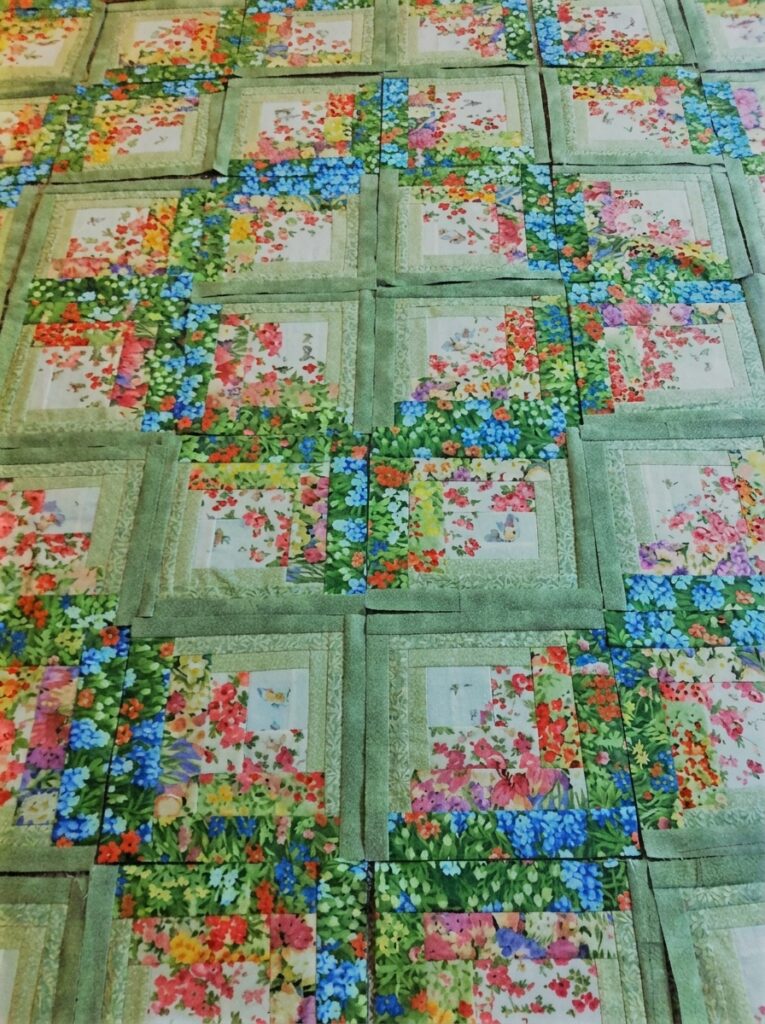
The Barn Raising layout is one of the most popular variations. In this arrangement, blocks are rotated to create large diamonds that radiate outward from the center of the quilt, producing a dramatic visual effect.
Another favorite is the Straight Furrows design. Here, the blocks are aligned to create diagonal pathways across the quilt. This arrangement is elegant and highlights the contrast between light and dark fabrics.
Modern quilters often experiment with monochromatic color schemes, rainbow gradients, or even scrappy designs made entirely from fabric leftovers. These creative approaches breathe new life into the traditional pattern.
Miniature Log Cabin Quilt Blocks are also becoming increasingly popular. Small-scale versions can be used for table runners, wall art, bags, pillows, or seasonal decorations.
No matter which variation you choose, the Log Cabin Quilt Block Pattern offers endless opportunities for creativity. Its timeless structure makes it easy to adapt to any quilting style, from classic to contemporary.
FAQ About Log Cabin Quilt Block Pattern
1. Is the Log Cabin Quilt Block Pattern suitable for beginners?
Yes. The pattern is considered beginner-friendly because it uses simple straight seams and repetitive construction techniques. It is an excellent project for learning basic quilting skills.
2. What fabrics work best for a Log Cabin Quilt Block?
Cotton quilting fabric is the most popular choice. It is easy to sew, durable, and available in a wide variety of colors and patterns.
3. Why is the center square traditionally red?
Historically, the red center symbolizes the hearth or fireplace of a home, representing warmth, family, and comfort.
4. Can I make a modern version of the Log Cabin Quilt Block?
Absolutely. Many modern quilters use bright colors, gradients, scraps, or unconventional layouts to create contemporary interpretations of this classic design.
5. How large should a Log Cabin Quilt Block be?
There is no fixed size. Blocks can range from a few inches to over a foot wide depending on the project. Smaller blocks create intricate designs, while larger blocks are quicker to assemble.
Conclusion
The Log Cabin Quilt Block Pattern is a timeless quilting design that combines history, simplicity, and endless creative possibilities. Throughout this tutorial, you learned about its fascinating origins, the materials required, step-by-step construction methods, and several inspiring layout variations.
Whether you prefer traditional color schemes or modern interpretations, this classic block offers a wonderful opportunity to explore your creativity and improve your quilting skills. Every block tells a story, and every quilt becomes a treasured handmade creation that can be enjoyed for generations.