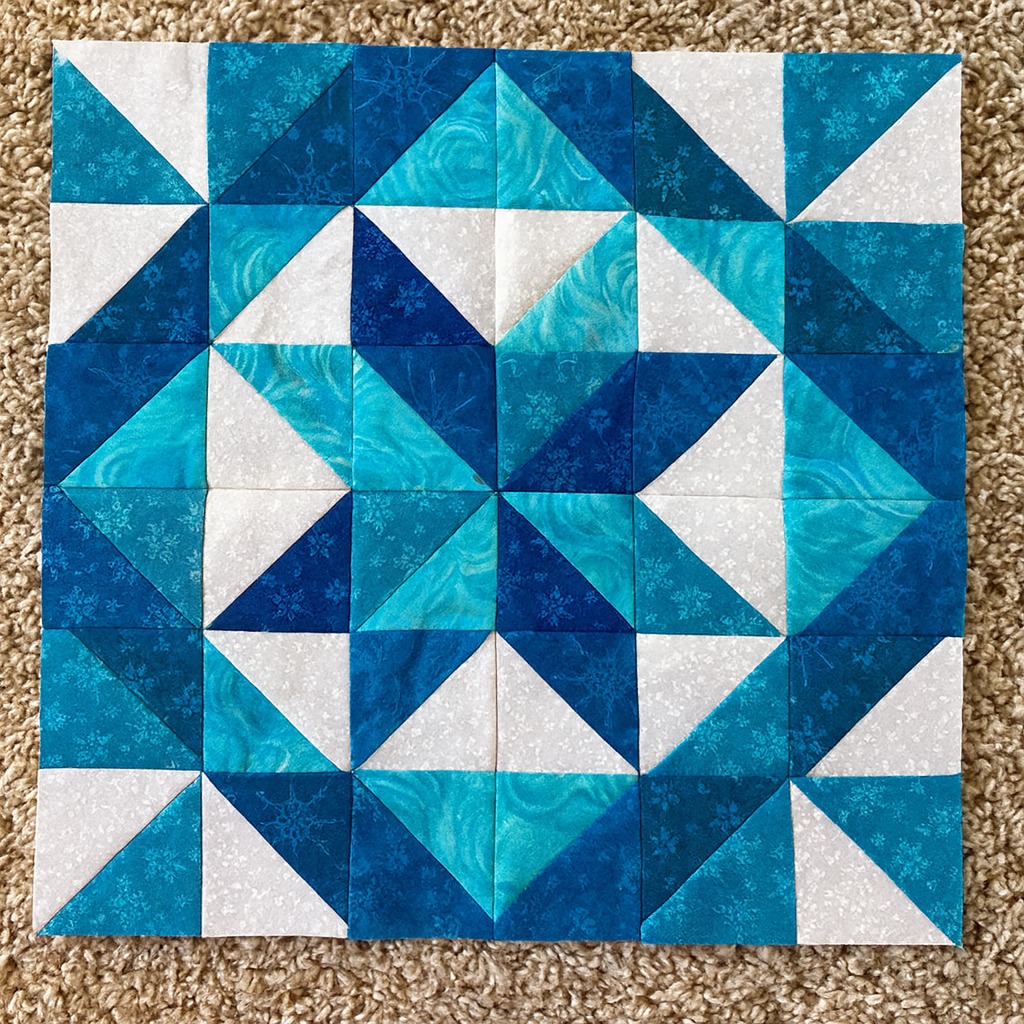
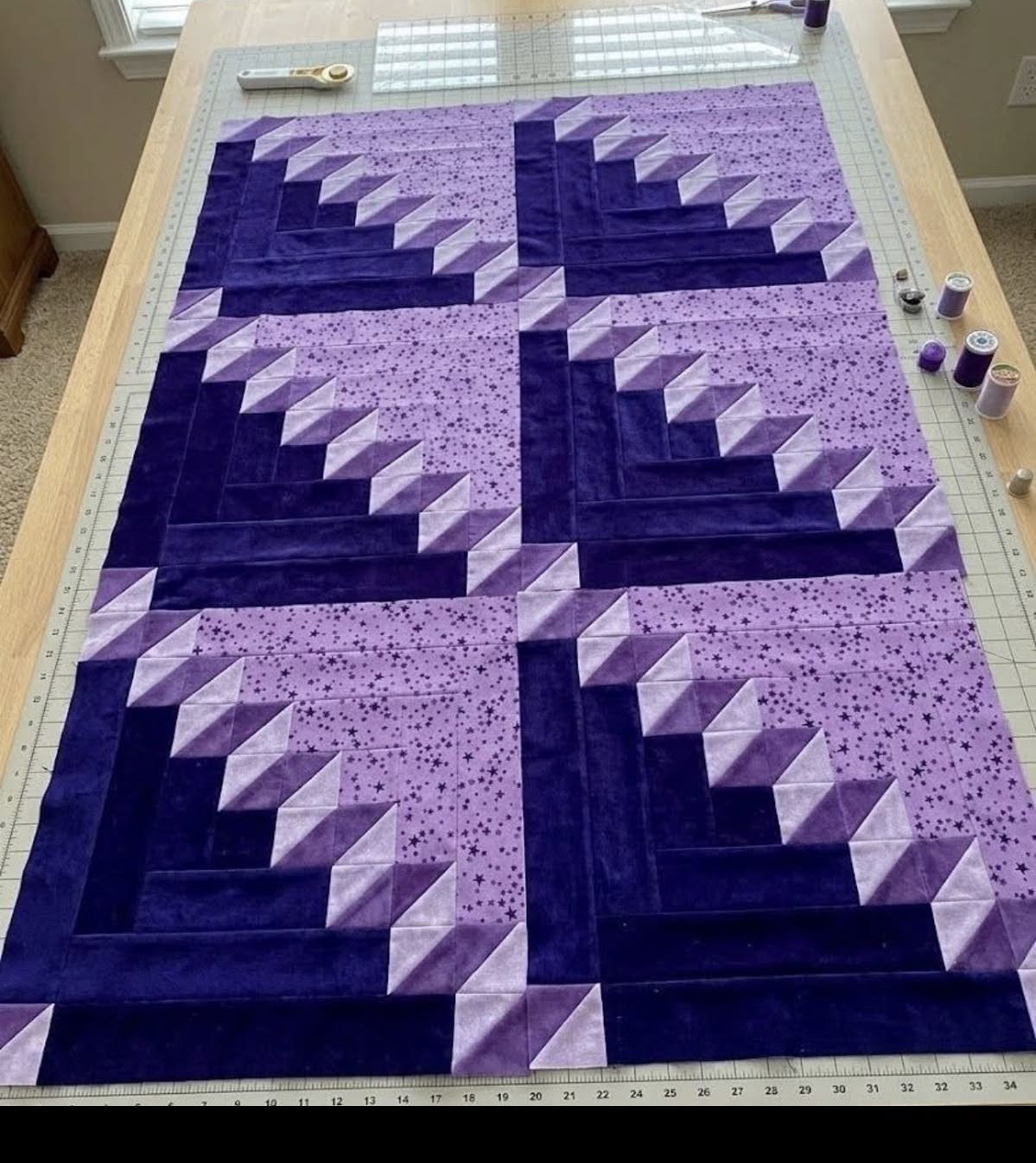
Stairway To Heaven Quilt Pattern is a visually striking patchwork project built around repeated geometric units that seem to climb diagonally across the quilt like a staircase. The beauty of this design comes from careful color placement and repetition: relatively simple fabric shapes can create impressive movement when they are arranged in the correct sequence. Depending on the fabrics you choose, the finished Stairway To Heaven Quilt can feel traditional and cozy, colorful and scrappy, or clean and contemporary. The pattern is especially attractive for quilters who enjoy designs that look intricate while being assembled from manageable patchwork sections.
Another advantage of the Stairway To Heaven Quilt Pattern is the freedom it gives you when working with color and contrast. A two-color combination can emphasize the stair-step geometry, while several coordinated fabrics can create a softer progression across the quilt. Scraps are also excellent for this design because small changes in print and shade can add texture without hiding the overall structure. The key is maintaining enough contrast between neighboring sections so that the characteristic diagonal pathway remains easy to see. Light and dark values can be alternated strategically to strengthen this effect even when many different prints are included.
Creating a Stairway To Heaven Quilt is also an excellent opportunity to improve essential quilting techniques, including accurate cutting, consistent quarter-inch seam allowances, strip piecing, constructing smaller units, pressing, matching intersections, arranging blocks, quilting, and binding. The exact dimensions can be adjusted according to the finished quilt size you want, but the basic construction principle remains the same: prepare accurate units, arrange contrasting pieces into stepped sections, repeat the blocks, and carefully join them so the visual pathway continues across the quilt. This tutorial explains the process from fabric selection through final finishing.
Choosing Fabrics and Preparing the Stairway To Heaven Quilt Pieces
Begin the Stairway To Heaven Quilt Pattern by deciding how large you want your finished project to be. A smaller arrangement can become a table topper or wall hanging, while additional blocks can create a lap quilt, throw, or larger bed quilt.
Choose quality quilting cotton for consistent results. Cotton is stable, easy to cut accurately, and responds well to pressing. Using fabrics of similar weight also makes it easier to maintain flat seams throughout the repeated patchwork construction.
Contrast is especially important in this pattern. Consider combining a light background with medium and dark fabrics so the staircase effect remains visible. Cream with blues, white with jewel tones, or pale gray with bold solids can all create attractive results.
For a scrappy Stairway To Heaven Quilt, organize leftover fabrics by value. Instead of worrying about matching every color perfectly, separate scraps into light, medium, and dark groups. This allows you to create contrast while maintaining the spontaneous personality of a scrap quilt.
Prepare a rotary cutter, self-healing cutting mat, acrylic quilting rulers, sewing machine, coordinating thread, pins or clips, and an iron. Accurate rulers are particularly useful because repeated geometric units need consistent dimensions to align correctly.
Cut the squares, rectangles, or strips required for your chosen block size. Organize the pieces by color and position before sewing. If you are adjusting the dimensions yourself, make one complete test block first to confirm that the proportions create the intended stair-step quilt design.
Sewing the Stairway To Heaven Quilt Pattern Step by Step
Start by arranging the pieces for one block on a flat work surface. Identify the direction in which the staircase should travel. Keeping a reference block nearby can prevent accidental rotations while you assemble additional units.
If your version uses strip-pieced sections, place two contrasting strips right sides together and align their long edges. Sew with an accurate quarter-inch seam allowance, then press the seam carefully according to your preferred direction.
Cut the completed strip set into smaller segments according to the dimensions required for the block. Use the lines on your quilting ruler to keep every cut square and consistent. Accurate segments make the later assembly significantly easier.
Combine these segments with the remaining squares or rectangles to build the stepped arrangement. Work from one side toward the other, checking after each addition that the contrasting fabrics continue in the correct diagonal direction.
Assemble neighboring pieces into rows. Sew slowly and maintain the same seam allowance throughout the entire Stairway To Heaven Quilt Pattern. Small variations can accumulate across repeated blocks and make intersections difficult to match later.
After completing each row, press it carefully and return it to the layout. Once all rows are finished, join them together while matching the important intersections. Press the completed block flat and compare it with your planned dimensions before making additional blocks.
Arranging the Blocks and Creating the Complete Quilt Top
When several blocks are finished, place them together on a design wall, large table, or clean floor. Do not begin joining them immediately. Rotating the blocks can dramatically change the movement and appearance of the Stairway To Heaven Quilt.
For a strong continuous staircase effect, orient the blocks so the diagonal sections appear to flow naturally from one block into the next. Step away from the layout periodically because the larger secondary pattern is often easier to recognize from a distance.
Pay attention to color distribution. If several dark fabrics are concentrated in one corner, the quilt may feel visually unbalanced. Rearranging a few blocks can spread strong colors more evenly while preserving the stair-step movement.
Once you are satisfied with the arrangement, photograph the layout. This provides a useful reference if blocks become mixed while you are sewing. You can also label each row to preserve the exact order.
Join the blocks into horizontal rows using a consistent quarter-inch seam. Press the seams in neighboring rows in opposite directions whenever practical. This allows intersections to nest together and can help produce cleaner alignment.
Finally, sew the completed rows together. Match important seams with pins or clips before stitching. Press the entire quilt top and inspect its outer edges. Optional borders can now be added if you want to frame the staircase design or increase the overall dimensions.
Quilting, Binding, and Creative Stairway To Heaven Variations
Prepare the quilt sandwich by cutting batting and backing slightly larger than the completed quilt top. Place the backing wrong side up, add the batting, and center your Stairway To Heaven Quilt Pattern top with the right side facing upward.
Smooth all three layers carefully, working from the center toward the outer edges. Baste them using your preferred method. Proper basting helps prevent wrinkles and shifting as the quilt moves through the quilting process.
Straight-line quilting is particularly effective with this geometric design. Diagonal lines can reinforce the staircase movement, while horizontal and vertical lines can create an interesting contrast against the diagonal patchwork.
Echo quilting is another attractive possibility. Follow selected edges of the stair-step pattern and repeat those lines at regular intervals. This approach adds texture while keeping the pieced design as the primary visual feature.
After quilting is complete, trim away the excess batting and backing. Prepare binding strips, join them into one continuous length, and attach the quilt binding evenly around the perimeter. Take your time at the corners for a neat, durable finish.
Once you understand the basic construction, experiment with variations. Try a monochromatic gradient, rainbow staircase, two-color version, vintage scrap arrangement, or modern combination of solids. The same Stairway To Heaven Quilt Pattern can look remarkably different simply by changing fabric placement.
FAQ About the Stairway To Heaven Quilt Pattern
Is the Stairway To Heaven Quilt Pattern suitable for beginners?
Yes. A confident beginner who can sew consistent straight seams can approach this design successfully. Careful organization and accurate cutting are more important than complicated sewing techniques.
What fabric is best for this quilt?
Quality quilting cotton is an excellent option because it is stable, easy to cut, and easy to press.
How many colors should I use?
There is no required number. A two-color quilt can emphasize the geometric structure, while several coordinated colors can create a more varied appearance.
Can I make a scrappy Stairway To Heaven Quilt?
Absolutely. The design can work beautifully with scraps. Organize fabrics by light, medium, and dark values to maintain enough contrast for the staircase effect.
How do I make the stair-step pattern more noticeable?
Strong contrast is the easiest solution. Make sure the fabrics forming the staircase are visually distinct from the surrounding pieces.
What is strip piecing?
Strip piecing involves sewing long strips of fabric together first and then cutting the resulting strip set into smaller units. It can make repeated patchwork construction faster and more consistent.
Why are my blocks different sizes?
Inaccurate cutting or inconsistent seam allowances are common causes. Measure units throughout construction rather than waiting until every block is finished.
Why are my intersections not matching?
Check your seam allowances and pressing. Pressing seams in opposite directions on neighboring rows can help the seams nest together at intersections.
Can I rotate the blocks?
Yes. Block rotation can create alternative secondary patterns. Arrange all completed blocks before sewing the quilt top so you can experiment with different possibilities.
Can I add sashing?
Yes, although sashing may visually separate the staircase sections. If maintaining a continuous diagonal pathway is important, preview the design with sashing before committing to it.
Can I add borders to the quilt?
Absolutely. A simple border can frame the Stairway To Heaven Quilt and provide additional visual space around a busy patchwork center.
What quilting design works well with this pattern?
Straight-line, diagonal, grid, and echo quilting can all complement the geometric construction. Simpler quilting often allows the patchwork to remain the focal point.
Can I make a smaller project using this pattern?
Yes. A limited number of blocks can create a table runner, mini quilt, wall hanging, cushion front, or other decorative sewing project.
How can I make the design look modern?
Try solid fabrics, a limited color palette, high contrast, and generous negative space. Clean straight-line quilting can further reinforce a modern appearance.
Conclusion
The Stairway To Heaven Quilt Pattern shows how thoughtful repetition and color placement can transform straightforward geometric pieces into a quilt filled with movement. The diagonal stair-step effect gives the finished project a distinctive personality, while the manageable block construction makes the design enjoyable to assemble one section at a time.
Throughout this tutorial, you learned how to choose quilting fabrics, organize colors by value, cut accurate pieces, use strip piecing, maintain a quarter-inch seam allowance, assemble individual blocks, match intersections, plan the final layout, prepare a quilt sandwich, add quilting, and finish the edges with binding. Careful organization is particularly important because the orientation of each block determines whether the staircase appears to flow smoothly across the quilt.