Fabric Snowman Pattern is a delightful sewing project that brings warmth, creativity, and a handmade touch to Christmas decorations. Making a snowman from fabric is a wonderful way to transform simple materials into a charming seasonal ornament. With soft cotton fabric, basic sewing supplies, and a few decorative accessories, you can create an adorable snowman to display on a shelf, decorate a holiday table, or give as a thoughtful handmade gift.
One of the most attractive features of a Fabric Snowman Pattern is the freedom to customize every detail. You can choose traditional white fabric for the body, colorful cotton prints for the scarf, and felt pieces for the hat and facial features. Some handmade snowmen have a rustic farmhouse appearance, while others feature bright Christmas colors and playful decorations.
Creating handmade Christmas decorations is also a meaningful way to enjoy the holiday season while practicing useful sewing techniques. A fabric snowman provides an opportunity to improve cutting accuracy, learn basic stitching methods, and experiment with soft stuffing. The project can be completed using a sewing machine or carefully sewn by hand, making it accessible to different skill levels.
Materials and Preparation for a Fabric Snowman Pattern
Before starting your Fabric Snowman Pattern, gather all the materials needed to create a soft and attractive decoration. White cotton, muslin, fleece, or felt can be used for the snowman’s body, depending on the texture you prefer. Cotton is easy to cut and sew, while fleece creates a softer and slightly fuller appearance. You will also need polyester fiberfill for stuffing, matching sewing thread, scissors, a sewing needle, and fabric marking tools. A sewing machine can make construction faster, although hand sewing works well for this beginner-friendly project. Preparing everything beforehand helps make the creative process more organized and enjoyable.
Choosing the right fabric for snowman crafts is important because different materials produce different results. Plain white cotton creates a traditional appearance, while cream-colored muslin offers a charming vintage style. Soft fleece is ideal for snowmen with a plush texture, and felt is especially useful for small accessories. Avoid fabrics that stretch excessively unless you are comfortable working with them. Stable woven cotton is often the easiest choice for beginners because it maintains its shape during cutting and stitching. Ironing the fabric before tracing the pattern also helps improve accuracy.
For a simple DIY snowman sewing pattern, prepare two circular templates to create the head and body. A practical starting size is a 6-inch circle for the head and an 8-inch circle for the body. These measurements produce a small decorative snowman, although the finished dimensions will be smaller after gathering and stuffing. You can create the templates using paper and a compass or by tracing round household objects. Cut one fabric circle for each section, allowing enough material for gathering. If you prefer a larger snowman, increase both circle measurements while maintaining a balanced proportion.
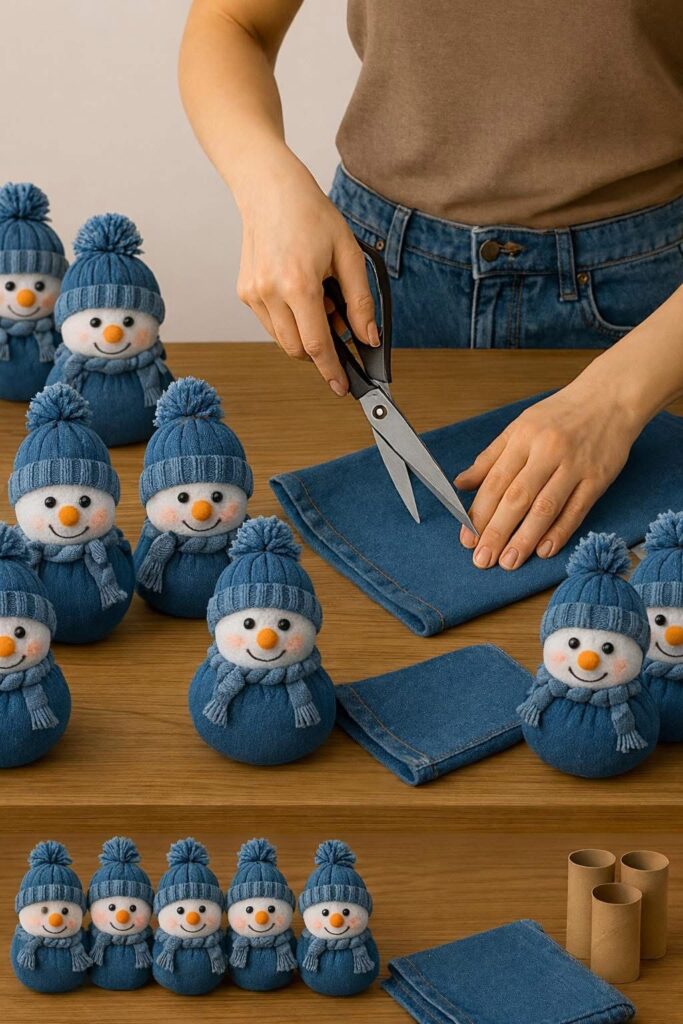
Additional materials are needed to personalize your handmade fabric snowman. Small pieces of orange felt can create a carrot-shaped nose, while black embroidery thread works beautifully for the eyes and mouth. A narrow strip of plaid cotton or fleece can become a cozy scarf. Felt, flannel, or another fabric scrap can be used to make a miniature winter hat. You may also add decorative buttons, embroidery, or a small fabric patch to the body. Choose embellishments that complement one another without overwhelming the simple snowman shape.
Step-by-Step Instructions to Make a Fabric Snowman
Begin your Fabric Snowman Pattern by placing the paper templates on the wrong side of your selected fabric. Trace one 8-inch circle for the body and one 6-inch circle for the head. Carefully cut along the marked lines using sharp fabric scissors. Try to keep the edges smooth because uneven cutting may affect the gathered shape. If your fabric has a directional print or visible texture, consider its orientation before cutting. Once both circles are ready, place them on your work surface with the wrong sides facing upward.
To create the fabric snowman body, thread a sewing needle with strong matching thread and tie a secure knot. Sew a running stitch approximately ¼ inch from the edge of the larger fabric circle. Continue around the entire circumference, keeping the stitches reasonably even. Gently pull the thread to gather the fabric into a pouch, leaving an opening large enough for stuffing. Add polyester fiberfill gradually, distributing it evenly to create a rounded shape. Avoid overstuffing because excessive pressure may distort the fabric or weaken the gathering stitches.
After stuffing the body, continue pulling the gathering thread until the opening becomes small. Add a few stitches across the gathered section to hold everything securely. The gathered opening should face upward because it will eventually be covered by the snowman’s head. Use your fingers to adjust the stuffing and smooth any uneven areas. The completed stuffed fabric snowman body should feel firm enough to maintain its shape while remaining soft to the touch. If necessary, add a small amount of extra stuffing before closing the opening completely.
Repeat the gathering process with the smaller circle to make the snowman head. Sew a running stitch around the edge, gently gather the fabric, and insert fiberfill until the head becomes rounded. Close the opening securely, making sure the stuffing remains inside. Position the head on top of the body, with the gathered openings facing each other. This arrangement helps conceal the unfinished sections and creates a cleaner appearance. Adjust the placement until the head sits naturally and the snowman has balanced proportions.
Decorating and Customizing Your Handmade Fabric Snowman
Adding facial features is one of the most enjoyable parts of making a Fabric Snowman Pattern. Use black embroidery thread to create two small eyes and a cheerful smile. You can make the mouth using several tiny straight stitches arranged in a gentle curve. For the nose, cut a small triangular piece of orange felt and roll or fold it into a carrot-like shape. Secure it with a few hand stitches. Position the facial details carefully before attaching them permanently, ensuring that the expression looks balanced and friendly.
A colorful scarf can instantly transform your DIY Christmas snowman into a charming seasonal decoration. Cut a narrow strip of plaid cotton, flannel, or fleece long enough to wrap comfortably around the neck. For a small snowman, a strip approximately 1 inch wide and 12 inches long is a useful starting point. Adjust the length according to the finished figure. Tie the scarf gently around the connection between the head and body. You can also cut short fringe along the ends to create a realistic winter accessory.
Making a miniature hat adds another delightful detail to your fabric snowman decoration. A simple felt hat can be created by cutting a rectangular strip that fits around the head and sewing its short ends together. Gather or close the top, then fold the lower edge upward to form a brim. Alternatively, use a small piece of stretchy knit fabric to create a soft winter cap. Choose colors that coordinate with the scarf for a harmonious appearance. A tiny fabric pom-pom can provide an additional decorative accent.
For a rustic farmhouse fabric snowman, consider using cream muslin, muted plaid fabric, and natural-looking accessories. A small piece of burlap-style fabric can be used for a scarf or decorative patch, provided the edges are finished to prevent excessive fraying. Neutral colors such as beige, brown, gray, and burgundy create a warm vintage appearance. You may also lightly shade the cheeks with a fabric-safe coloring product. Always test decorative products on leftover fabric before applying them to the finished snowman.
Creative Uses, Finishing Tips, and Care for Fabric Snowmen
A completed Fabric Snowman Pattern can be used in many different areas of your home. Small snowmen make lovely additions to holiday shelves, entryway tables, and decorative trays. Larger versions can become charming centerpieces when arranged with fabric trees or other handmade winter decorations. Because the project is lightweight, it can also be adapted into a hanging ornament by adding a securely sewn fabric loop. However, the snowman should be properly balanced so that it hangs naturally without tilting forward.
Creating handmade Christmas gifts is another wonderful use for this sewing project. A fabric snowman can be a thoughtful present for friends, relatives, teachers, or anyone who appreciates seasonal crafts. You can personalize each decoration with favorite colors, embroidered initials, or a small fabric tag. Handmade gifts often feel special because they reflect time, attention, and creativity. If you plan to make several snowmen, preparing all the fabric pieces together can help organize the process and reduce unnecessary cutting time.
For a polished snowman sewing project, pay attention to the final stitching. Inspect the connection between the head and body, ensuring that the thread is secure and the pieces do not move excessively. Check the scarf and hat for loose edges or unfinished seams. If you have added embroidery, gently smooth the surrounding fabric to remove wrinkles. Small adjustments can improve the overall appearance considerably. A carefully finished snowman looks more professional and is more likely to remain attractive through multiple holiday seasons.
Proper storage helps preserve your handmade fabric Christmas decorations. After the holiday season, remove surface dust with a soft brush or clean, dry cloth. Store the snowman in a breathable container or fabric bag away from moisture and direct sunlight. Avoid placing heavy objects on top because pressure may flatten the stuffing or distort the shape. If your snowman includes delicate felt accessories, arrange them carefully before storing. Keeping decorations in a dry environment also helps protect the fabric from unwanted odors and mildew.
Cleaning a stuffed fabric snowman requires attention to the materials used. Decorations containing glued embellishments, delicate embroidery, or cardboard inserts should generally not be placed in a washing machine. Instead, gently spot-clean the fabric using a slightly damp cloth and mild soap when appropriate. Test the cleaning method on an inconspicuous area first. Allow the decoration to dry completely before returning it to storage. If your snowman contains only washable fabric, thread, and stuffing, follow the care recommendations for those materials.
Frequently Asked Questions About Fabric Snowman Patterns
What is the best fabric for making a snowman?
Cotton, muslin, fleece, and felt are excellent choices for a fabric snowman pattern. Cotton and muslin are particularly beginner-friendly because they are easy to cut and sew. Fleece creates a softer appearance, while felt works well for accessories.
Can beginners make a fabric snowman without a sewing machine?
Yes. This easy snowman sewing pattern can be completed entirely by hand using basic running stitches and ladder stitches. A sewing machine is optional for the gathered-circle construction described in this tutorial.
How much fabric do I need for one snowman?
For a small snowman made with 6-inch and 8-inch fabric circles, a piece of fabric approximately 10 by 18 inches provides enough space for both circles, depending on the layout. Additional scraps are useful for making the hat and scarf.
What should I use to stuff a fabric snowman?
Polyester fiberfill is a popular option because it is lightweight, soft, and easy to distribute. Add the stuffing gradually to achieve a smooth, rounded shape without making the fabric excessively tight.
How can I make my fabric snowman stand upright?
Create a slightly flattened base by adjusting the stuffing inside the lower section. You can also add a securely enclosed weighted insert during construction if the snowman is intended only as a decoration.
Conclusion
Creating a Fabric Snowman Pattern is a simple and enjoyable way to bring handmade charm into your Christmas decorations. Throughout this tutorial, you learned how to select suitable fabrics, prepare circular templates, sew and stuff the snowman’s body, attach the head, and personalize the finished decoration with scarves, hats, and embroidered facial features.