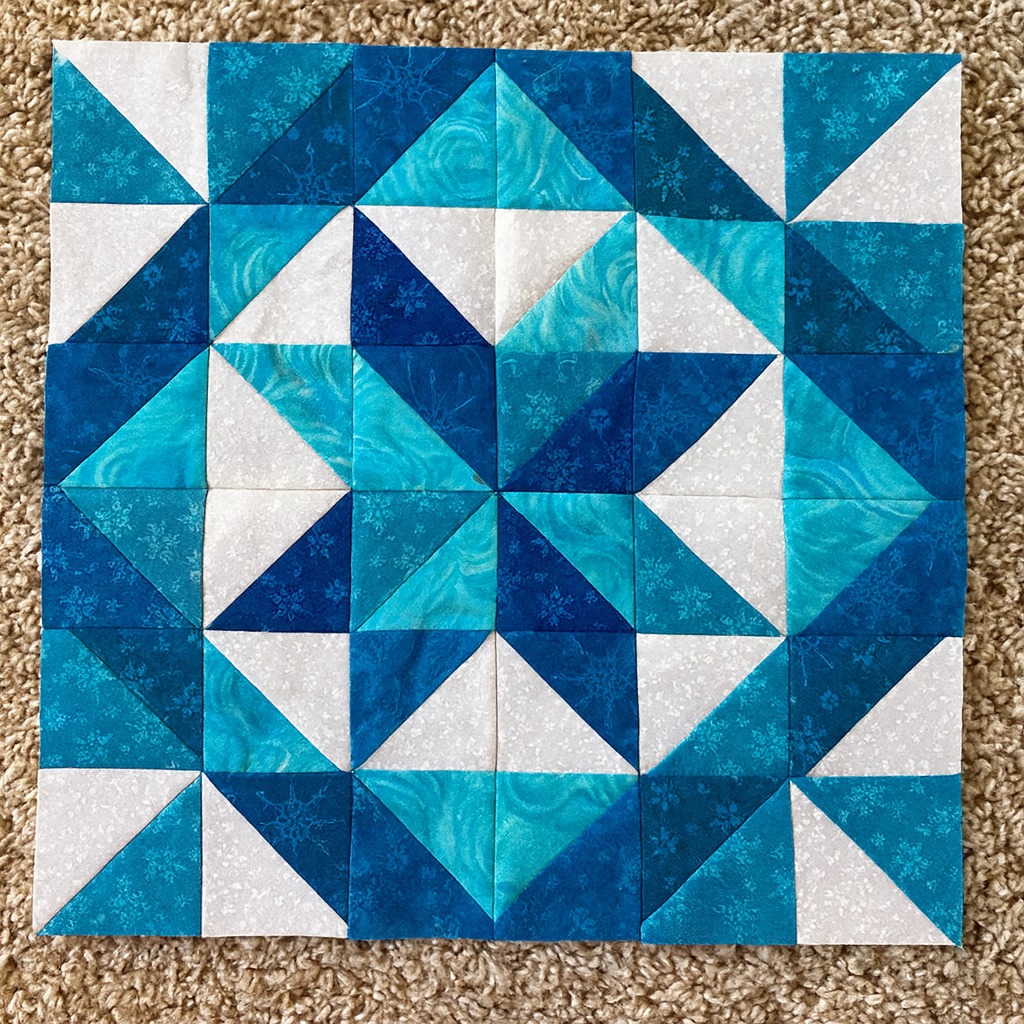
One of the most appealing characteristics of the Jacob’s Ladder Quilt Pattern is its versatility. Although the original design is commonly associated with traditional two-color arrangements, modern quilters frequently experiment with colorful prints, soft pastels, neutral fabrics, and contrasting combinations. The pattern works beautifully for baby quilts, decorative wall hangings, lap quilts, and full-sized bed coverings. Its repeating blocks make it easy to adjust the dimensions according to your needs, while the straightforward construction allows beginners to develop confidence with cutting, piecing, and pressing techniques. Every completed block contributes to a larger geometric composition, making the sewing process both relaxing and rewarding. The result is a quilt that combines traditional craftsmanship with personal creativity.
Creating a Jacob’s Ladder quilt is also a meaningful way to enjoy the history of handmade patchwork. Traditional quilt blocks have been passed between generations, often carrying memories of family gatherings, creative afternoons, and carefully selected fabric collections. This particular pattern remains popular because it uses accessible sewing techniques while producing a visually interesting result. Learning how to construct the blocks helps quilters understand fabric placement, seam accuracy, and the importance of consistent measurements. Throughout this guide, you will discover the materials required, the construction process, helpful sewing techniques, and practical finishing recommendations. By following each stage patiently, you can create a beautiful traditional patchwork quilt that reflects your personal style and sewing abilities.
Understanding the Jacob’s Ladder Quilt Pattern and Choosing Materials
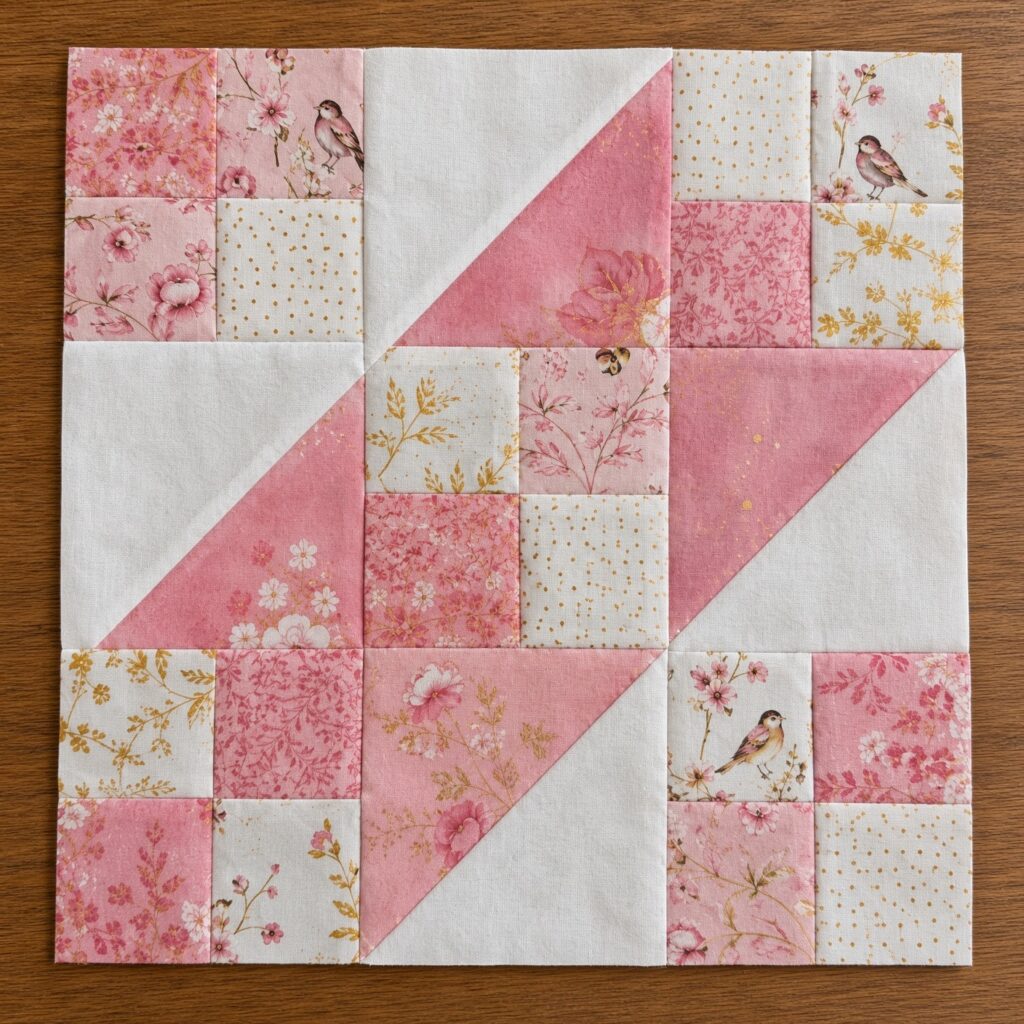
The Jacob’s Ladder Quilt Pattern is a traditional patchwork design made from alternating four-patch units and half-square triangle units. When these components are arranged correctly, they form a distinctive diagonal chain that resembles a ladder. This combination creates a striking geometric appearance without requiring complicated templates or advanced sewing equipment.
A standard Jacob’s Ladder quilt block can be constructed using five four-patch units and four half-square triangle units arranged in a three-by-three grid. Each four-patch contains two light squares and two dark squares positioned diagonally. The surrounding triangle units connect these contrasting shapes, producing the characteristic ladder effect across the block.
For a beginner-friendly project, consider making blocks that finish at 12 inches, approximately 30.5 cm. This size provides enough space to work comfortably with the smaller components while creating a noticeable design. A quilt containing 20 blocks arranged in four columns and five rows will measure approximately 48 by 60 inches before borders, making it suitable for a cozy lap quilt.
Choosing the right quilting fabric is essential for highlighting the geometric design. Medium-weight, 100% cotton quilting fabric is particularly suitable because it is easy to cut, press, and sew. Select two contrasting colors, such as cream and navy, white and red, or beige and forest green. Strong contrast makes the diagonal ladder pattern more visible.
The basic materials include cotton fabric, a rotary cutter, a cutting mat, a quilting ruler, matching thread, sewing pins or clips, an iron, batting, backing fabric, and binding strips. A sewing machine with a reliable straight stitch will make construction easier. A quarter-inch presser foot is especially helpful for maintaining consistent seam allowances throughout the project.
Before beginning your Jacob’s Ladder quilt tutorial, wash your fabrics if you prefer to prewash quilting cotton, and press them carefully to remove wrinkles. Measure every piece accurately and organize the cut fabric into separate groups. Preparing the materials in advance reduces confusion during assembly and helps create clean, evenly sized blocks.
Step-by-Step Instructions for Sewing the Jacob’s Ladder Quilt Block
Begin your Jacob’s Ladder Quilt Pattern by preparing the fabric pieces for one 12-inch finished block. You will need five four-patch units and four half-square triangle units, each measuring 4½ inches unfinished. For the four-patch units, cut ten light squares and ten dark squares measuring 2½ inches each. For the triangles, cut two light squares and two dark squares measuring 5 inches each.
Start by creating the four-patch quilt units. Sew one light 2½-inch square to one dark square using a quarter-inch seam allowance. Repeat until you have ten pairs. Press the seams toward the darker fabric, then join the pairs into five four-patch units, positioning matching colors diagonally. Each completed unit should measure 4½ inches square, including seam allowances.
Next, prepare the half-square triangles using the two-at-a-time method. Place one light 5-inch square and one dark 5-inch square right sides together. Draw a diagonal line from one corner to the opposite corner on the wrong side of the lighter fabric. Sew a quarter inch away from both sides of the marked line, then cut along the line. Repeat with the remaining fabric squares.
Press the four resulting triangle units carefully, avoiding unnecessary stretching along the diagonal seams. Trim each half-square triangle to exactly 4½ inches square. Accurate trimming is important because all nine units must fit together neatly. Use a quilting ruler with a clearly marked 45-degree line to keep the diagonal seam centered while trimming.
Arrange the nine units into three rows. Place four-patch units in the four corners and the center position, with half-square triangles occupying the remaining four positions. Rotate the triangle units and four-patches until the dark shapes form a continuous diagonal ladder across the block. Check the arrangement visually before sewing, since the orientation determines the final appearance.
Sew the units together row by row using consistent quarter-inch seams. Press the seams in alternating directions when practical so adjoining seams nest together. Join the three rows, matching intersections carefully, and press the finished block flat. Your Jacob’s Ladder quilt block should measure 12½ inches unfinished and finish at 12 inches once sewn into the quilt.
Creative Fabric Combinations and Helpful Quilting Techniques
One of the greatest advantages of the Jacob’s Ladder Quilt Pattern is the freedom to experiment with different fabric combinations. Traditional two-color quilts emphasize the ladder arrangement, while multicolored designs introduce additional visual interest. For a classic farmhouse appearance, consider pairing warm cream fabric with deep blue or burgundy cotton.
If you prefer a softer appearance, choose pastel shades such as lavender, pale pink, sage green, and ivory. These colors work especially well for baby quilts and bedroom decorations. Maintaining a clear difference between light and dark fabrics helps preserve the recognizable Jacob’s Ladder design, even when using several colors.
Modern quilters may enjoy combining solid fabrics with small floral prints, geometric patterns, or subtle textured cotton. Avoid using too many large, busy prints in the same block, because they can make the diagonal arrangement difficult to recognize. A balanced selection of fabrics allows the patchwork quilt pattern to remain visually organized.
Precision is particularly important when constructing traditional quilt blocks. Even small cutting differences can accumulate across multiple rows. Always check the dimensions of completed units before joining them. If a four-patch measures slightly larger than required, trim it carefully while keeping the seams centered. Consistent measurements produce smoother assembly and more accurate corners.
Pressing is another essential part of successful quilting. Instead of moving the iron aggressively across the fabric, lift and lower it gently to prevent distortion. When joining multiple blocks, alternate seam directions wherever possible. This technique reduces bulk at intersections and helps the finished Jacob’s Ladder quilt lie flatter.
Beginners should consider making one complete practice block before cutting fabric for the entire quilt. This allows you to become familiar with the construction sequence and identify any measurement problems. Once you are comfortable with the process, repeating the blocks becomes easier, making the Jacob’s Ladder Quilt Pattern an enjoyable project for developing consistent sewing skills.
Assembling, Quilting, and Finishing Your Jacob’s Ladder Quilt
After completing the individual blocks, arrange them on a clean floor or design wall to plan the overall Jacob’s Ladder quilt layout. For a lap quilt, a four-by-five arrangement using 12-inch finished blocks is a practical choice. Rotate the blocks as desired to explore different diagonal pathways and geometric effects before joining them permanently.
Sew the blocks into horizontal rows, matching corners and seams carefully. Press the seams in alternating directions to reduce bulk where the rows meet. Once all rows are assembled, join them together to create the quilt top. Measure the finished top before cutting the remaining layers, especially if you plan to add decorative borders.
Borders are optional but can provide a beautiful frame for the traditional quilt pattern. A narrow inner border in a contrasting color emphasizes the geometric design, while a wider outer border creates additional space around the blocks. For a simple appearance, you may leave the quilt without borders and allow the ladder arrangement to extend toward the edges.
To prepare the quilt sandwich, place the backing fabric wrong side up on a large, flat surface. Position the batting over the backing, then place the completed quilt top right side up. Smooth all three layers carefully and secure them with safety pins or temporary basting stitches. The backing and batting should extend beyond the quilt top to allow for shifting during quilting.
Choose a quilting design that complements the Jacob’s Ladder Quilt Pattern. Straight-line quilting is an excellent beginner-friendly option because it follows the geometric structure of the blocks. You can stitch along diagonal pathways, create a simple grid, or quilt parallel lines across the entire surface. More experienced quilters may prefer free-motion loops, feathers, or decorative motifs.
Finish the quilt by trimming the excess batting and backing, then attaching double-fold binding around the edges. Miter the corners carefully for a neat appearance. Once the binding is secured, inspect the quilt for loose threads and uneven stitching. Your completed handmade Jacob’s Ladder quilt is now ready to decorate your home, provide warmth, or become a thoughtful handmade gift.
Conclusion
The Jacob’s Ladder Quilt Pattern is a wonderful example of how simple patchwork techniques can create an impressive and timeless design. By combining four-patch blocks, half-square triangles, and carefully selected contrasting fabrics, quilters can produce beautiful geometric arrangements suitable for many different projects.
Throughout this guide, you learned how to choose materials, prepare fabric pieces, construct the traditional blocks, assemble the quilt top, and complete the finishing process. With patience and accurate sewing, the Jacob’s Ladder quilt can become a meaningful handmade creation that brings beauty and comfort to your home.