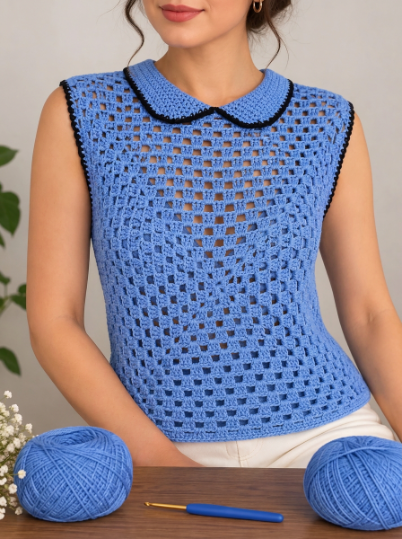
Easy Crochet Blouse Pattern is a wonderful project for anyone who wants to create a comfortable handmade garment while practicing essential crochet techniques. Unlike projects that require complicated shaping, a simple crochet blouse can be constructed from basic panels and straightforward stitches, making the process easier to understand and customize. The finished blouse can be lightweight and airy for warmer weather or slightly denser for cooler days depending on the yarn, hook size, and stitch pattern you choose. With careful measurements and consistent tension, you can create a wearable piece that combines handmade character with everyday comfort.
One of the greatest advantages of an Easy Crochet Blouse Pattern is the freedom to personalize the garment. Neutral shades such as cream, beige, white, gray, and soft brown can create a timeless blouse, while pink, turquoise, green, yellow, coral, or multicolored yarn can give the project a brighter personality. You can also experiment with stripes, contrasting borders, or subtle texture. Because crochet fabric behaves differently depending on fiber content and stitch density, making a gauge swatch before beginning is particularly important when creating clothing. A few minutes spent checking gauge can prevent significant sizing problems later.
This crochet blouse tutorial uses common US crochet terms and focuses on an approachable panel-based construction. You will learn how to take basic measurements, choose suitable yarn, create the foundation, crochet the front and back panels, form simple openings for the neck and arms, join the pieces, add sleeves or edging, and finish the blouse neatly. The instructions are intended as a flexible framework rather than a one-size-fits-all stitch count, since body measurements, yarn thickness, hook size, gauge, and preferred ease can vary considerably. By working from measurements, you can adapt the same basic construction to several sizes and styles.
Materials, Measurements, and Basic Crochet Stitches
Begin your Easy Crochet Blouse Pattern by choosing a comfortable yarn with good drape. Lightweight or medium-light yarn is particularly useful for garments because it can create fabric that moves naturally without becoming excessively heavy.
Cotton and cotton blends are popular choices for lightweight crochet clothing, while other soft garment-friendly fibers can also work well. Always consider the yarn’s care instructions, texture, elasticity, and finished weight before committing to a complete blouse.
Choose a crochet hook appropriate for your yarn and desired fabric. The yarn label provides a useful starting recommendation, but your personal tension may require a different hook. The finished swatch should feel flexible rather than stiff.
You will also need scissors, a yarn needle, stitch markers, and a flexible measuring tape. Measure the bust or chest circumference, desired blouse length, shoulder area, arm opening, and preferred sleeve length if you plan to include sleeves.
For this beginner-friendly design, half double crochet (hdc) is an excellent main stitch. Yarn over, insert your hook into the stitch, yarn over and pull up a loop, then yarn over again and pull through all three loops on the hook.
You may also use chain stitch (ch), single crochet (sc), double crochet (dc), and slip stitch (sl st). Single crochet works particularly well for firm edging, while double crochet can create a lighter and more open fabric.
How to Crochet the Front and Back Blouse Panels
Before beginning the actual blouse, make a gauge swatch using the selected yarn, hook, and stitch pattern. Measure the number of stitches and rows within a known area after treating the swatch as you intend to treat the finished garment.
Determine the desired finished circumference and include appropriate ease according to the style you want. A relaxed blouse requires additional room, while a closer-fitting design requires less. Divide the intended circumference according to your chosen panel construction.
Create a foundation chain wide enough for the front blouse panel, remembering that your gauge determines the correct number of chains. Measure the foundation without stretching it excessively and account for any turning chains required by your stitch.
Work half double crochet across the foundation, then turn and continue working rows. Count the stitches regularly so the panel remains the same width. Stitch markers placed at both edges can help prevent accidental increases or decreases.
Continue until the front panel reaches the point where you want the neckline or shoulder shaping to begin. For a very simple construction, leave the central stitches unworked and complete the two shoulder sections separately.
Make the back panel using the same width and general length. The back neckline can be shallower than the front if desired. Compare both panels before assembly and make sure the corresponding shoulder and side sections align correctly.
Joining the Blouse and Creating Sleeves and Neckline
Place the front and back panels together with the appropriate sides facing according to your preferred joining method. Align the shoulders carefully and join them using slip stitches, single crochet, or a neatly sewn seam with a yarn needle.
Next, join the side seams while leaving sufficient space at the top for the armholes. Measure both openings before completing the seams so the right and left sides remain balanced and comfortable.
Try on the partially assembled crochet blouse when possible. Check the width, length, neckline, shoulders, and armholes. Making adjustments at this stage is generally easier than after decorative edging has been added.
For a sleeveless blouse, finish the armholes with an even round of single crochet. Avoid placing too many stitches around curved areas because excessive stitches can make the edging ripple outward.
For simple sleeves, attach yarn around an armhole and work evenly in rounds. Continue until the sleeve reaches the desired length. You can maintain the same stitch count for a relaxed sleeve or use gradual decreases for a narrower shape.
Finish the neckline by attaching yarn at the back and working evenly around the opening. One or two rounds of single crochet can provide a clean finish. Make sure the edging remains flexible enough for the blouse to pass comfortably over the head.
Finishing, Sizing, and Customizing the Easy Crochet Blouse
Once the main construction is complete, weave in every yarn end securely. Use a yarn needle to pass each tail through several stitches, change direction, and continue weaving before trimming the excess.
Check the lower hem of your Easy Crochet Blouse Pattern. If you want a simple finish, work one or more rounds of single crochet. For a decorative effect, you can add a subtle shell-inspired or openwork border.
Blocking is especially valuable for crochet garments. Use a blocking method appropriate for your yarn fiber and follow its care instructions. Blocking can relax the stitches, improve drape, and help the panels settle into their intended dimensions.
To make the blouse longer, add more rows before finishing the front and back panels. For a cropped version, work fewer rows. Width should generally be planned from the gauge and desired finished measurements rather than adjusted randomly during construction.
You can personalize the blouse with crochet stripes, contrasting edging, textured rows, or carefully planned openwork sections. Another attractive option is to make the body in one color and use a second shade around the neckline, sleeves, and hem.
Before wearing the blouse, inspect all seams and finishing areas. Make sure the shoulders and side seams are secure and that no yarn ends remain loose. Keep the yarn label or record its fiber information so you can care for the finished garment correctly.
FAQ About the Easy Crochet Blouse Pattern
Is this Easy Crochet Blouse Pattern suitable for beginners?
Yes. A panel-based blouse can be an approachable first garment for crocheters who already know basic stitches and are comfortable working straight rows.
What crochet terms are used in this tutorial?
This tutorial uses US crochet terminology, including chain, single crochet, half double crochet, double crochet, and slip stitch.
What yarn is best for a crochet blouse?
A soft yarn with comfortable drape is generally preferable. Cotton and cotton blends are popular for lightweight garments, although many other garment-friendly fibers can work.
Why is gauge important for crochet clothing?
Gauge determines how large your fabric becomes. Even a small difference in stitch size can create a significant difference across the width of an entire blouse.
How do I make the blouse in my size?
Work from your measurements and gauge. Determine the desired finished circumference, length, armhole depth, and neckline dimensions before calculating the required stitches and rows.
How much ease should I add?
That depends on the desired fit and the behavior of your yarn. A loose blouse generally needs more positive ease than a fitted garment. Always evaluate the swatch before deciding.
Can I make this blouse sleeveless?
Yes. Simply omit the sleeves and finish each armhole with a neat edging.
Can I add long sleeves?
Yes. Continue crocheting the sleeves until they reach your desired length, using gradual decreases if you want them to taper toward the wrists.
How do I stop the sides from becoming uneven?
Count your stitches frequently and mark the first and last stitch of each row. Accidentally skipping or adding edge stitches is a common cause of uneven panels.
Can I use double crochet instead of half double crochet?
Yes, but changing stitches alters the gauge, texture, and drape. Make a new gauge swatch and recalculate your dimensions before beginning.
How can I make the blouse more breathable?
Use a lighter yarn, suitable larger hook, or an open stitch pattern. Remember that changing the stitch pattern also changes gauge and may require new calculations.
Why is my neckline too tight?
The opening may be too small or the edging may have been worked too tightly. Check that the neckline comfortably passes over the head before completing the final finishing rounds.
Should I block my crochet blouse?
In most cases, blocking can significantly improve the appearance and drape of a crochet garment. Always select a method suitable for the yarn fiber.
Can I make a striped crochet blouse?
Absolutely. Change colors after a chosen number of rows to create horizontal stripes. Keeping the stripe sequence consistent across the front and back can produce a coordinated appearance.
Conclusion
The Easy Crochet Blouse Pattern is a practical introduction to handmade crochet clothing because it combines straightforward construction with plenty of room for personalization. By working from accurate measurements and gauge rather than relying on a universal stitch count, you can create a blouse that better matches your preferred dimensions and style.
Throughout this tutorial, you learned how to choose yarn, make a crochet gauge swatch, calculate the basic panel dimensions, work half double crochet, create front and back sections, form a simple neckline, join shoulders and sides, create armholes, add optional sleeves, finish the edges, weave in yarn ends, and block the completed garment. These skills provide an excellent foundation for exploring more advanced crochet clothing patterns in the future.