The Candle Quilt Block Tutorial is a charming way to bring warmth, light, and traditional handmade character into a quilting project. A candle motif works beautifully in seasonal quilts, Christmas projects, table runners, wall hangings, and decorative pillows, but it can also be adapted for year-round designs. By combining simple geometric fabric pieces, quilters can create the recognizable appearance of a glowing candle while still enjoying the precision and creativity of traditional patchwork.
One of the best features of a Candle Quilt Block is the freedom you have when choosing fabrics. Classic red, green, gold, and cream can create a festive Christmas candle, while white, ivory, beige, and muted florals offer a softer farmhouse appearance. Modern quilters can experiment with bold solids and contrasting backgrounds. The flame itself is a wonderful place to introduce bright yellow, orange, or gold fabric, helping the candle immediately become the focal point of the block.
Although a completed candle block can look detailed, the construction can be surprisingly approachable when divided into smaller sections. The key is to work carefully, maintain a consistent ¼-inch seam allowance, and check the orientation of every piece before sewing. This tutorial explains the essential process for creating a candle-inspired quilt block, from selecting and preparing fabrics to assembling the flame, candle body, background, and finished quilt project.
Choosing Fabrics and Preparing the Candle Quilt Block
Begin your Candle Quilt Block Tutorial by deciding on the overall style of your project. Fabric selection will determine whether your candle looks traditional, festive, rustic, romantic, or contemporary. Before cutting anything, place several possible combinations together and evaluate them from a short distance.
For the candle body, white and cream fabrics create the appearance of a traditional wax candle. However, there is no reason to limit yourself to realistic colors. Red candles are beautiful for Christmas quilts, while blue, burgundy, green, pink, or patterned candles can give the block more personality.
The flame should have enough contrast to remain visible. Yellow, gold, amber, and orange fabrics are natural choices. You can even combine two warm colors if the construction of your chosen block allows a separate inner and outer flame effect.
Background fabric is equally important. A dark navy, charcoal, or deep green background can make a bright flame appear to glow. A light neutral background produces a cleaner and more traditional patchwork appearance. Always consider fabric contrast rather than color alone.
Quality 100% quilting cotton is recommended because it is stable, easy to cut, and responds well to pressing. Before beginning, press all fabric pieces so wrinkles do not interfere with accurate measurements.
Gather your basic quilting supplies, including a rotary cutter, self-healing cutting mat, transparent quilting ruler, sewing machine, coordinating thread, pins or clips, and iron. Since candle block patterns can vary in size and construction, make a test block before cutting enough pieces for an entire quilt.
Cutting and Piecing the Candle and Flame
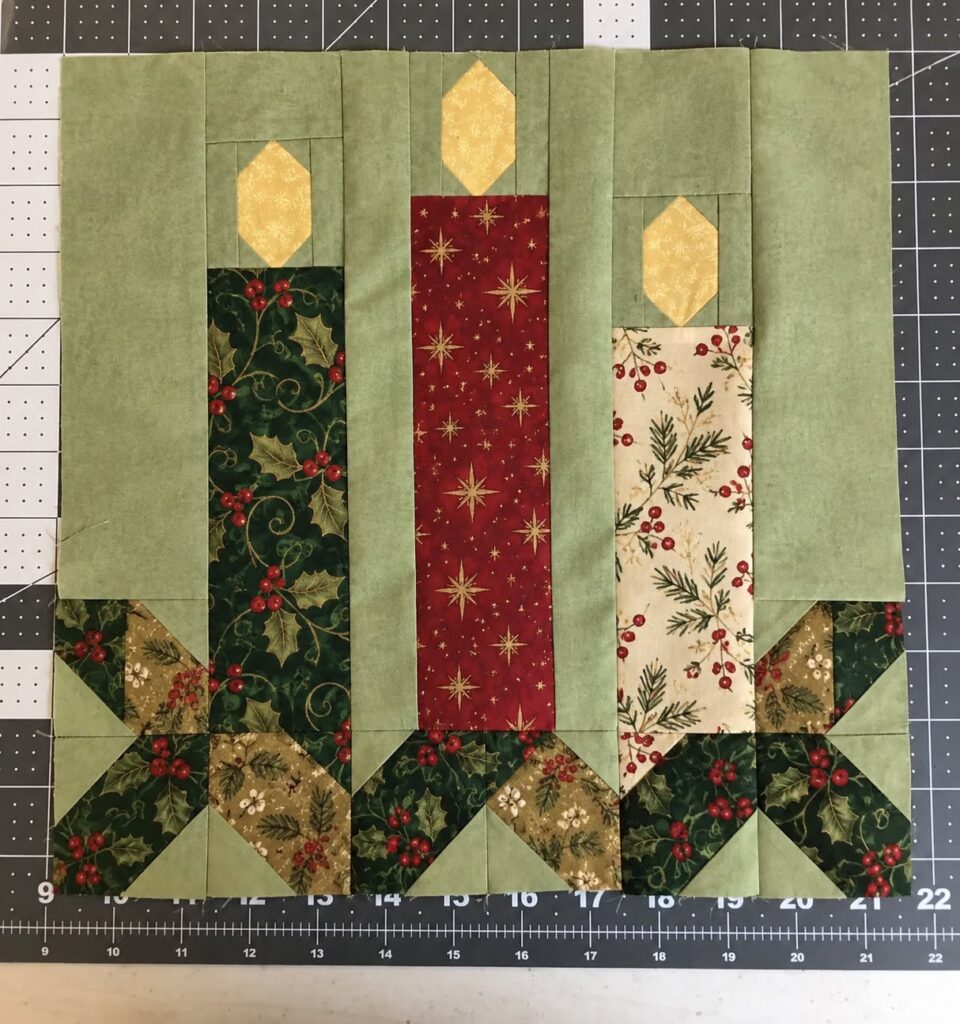
The flame is usually the feature that gives a Candle Quilt Block its personality. It should be visually distinct from both the candle body and surrounding background. Begin by preparing the fabric pieces required for this upper section.
Depending on the interpretation of the pattern, the flame can be created from simple geometric units such as squares and triangles. Position your warm-colored fabric carefully so the finished shape points upward and visually resembles a small flame.
When sewing triangle-based units, avoid stretching the bias edges. These edges can distort more easily than straight-grain fabric. Handle them gently and press rather than aggressively moving the iron across the surface.
Next, prepare the candle body. A simple rectangular section works especially well because it provides an immediate visual contrast with the smaller flame above it. If you want additional detail, use a subtle print or tone-on-tone fabric rather than a very large print that may distract from the shape.
Add background pieces around the candle according to the proportions of your desired block. Keep the candle centered unless your planned quilt layout intentionally calls for an asymmetrical composition.
Throughout construction, use a consistent ¼-inch seam allowance. Small inaccuracies can become more noticeable when the flame, candle, and background sections are joined. Measure completed units periodically instead of waiting until the entire block is finished.
After completing the upper flame section and lower candle section, place them together before sewing. Confirm that the flame is centered over the candle. Once satisfied, join the sections and press carefully to reveal your completed candle motif.
Assembling Candle Blocks Into a Beautiful Quilt Project
After completing one block, check its measurements and square it carefully if necessary. Avoid trimming aggressively because removing too much fabric can affect the seam allowance and make neighboring blocks difficult to match.
If you’re making multiple candles, this is the perfect opportunity to experiment with color. You could create every candle from the same fabric for a coordinated quilt or use different colors for a cheerful scrappy Candle Quilt.
Chain piecing can significantly speed up construction when making multiple blocks. Prepare all flame units together, followed by the candle bodies and background sections. Repeating one construction step at a time also helps improve consistency.
Once your blocks are complete, arrange them on a design wall or clean floor. Try placing the candles in straight rows for a traditional appearance or alternate their surrounding colors for additional movement.
Sashing can be added between blocks if you want each candle to have its own visual space. A simple neutral sashing fabric can frame the motifs beautifully without competing with them. Borders are another optional way to increase the final quilt dimensions.
A Candle Quilt Block Pattern is also useful for projects much smaller than a bed quilt. Three or four candle blocks can become a festive table runner, while one carefully finished block can make an attractive pillow cover or mini wall hanging.
Before joining all blocks permanently, photograph your chosen layout. The picture will serve as a reference and help prevent accidental changes in block placement while you’re sewing rows together.
Quilting and Finishing Your Candle Quilt Block Project
Once the quilt top is assembled, prepare the backing and batting. Both should be slightly larger than your quilt top on every side. Place the backing wrong side up, add the batting, and position the quilt top right side up.
Smooth the layers carefully before basting. Safety pins, thread basting, or another preferred quilting method can help prevent movement while the project is quilted.
The quilting design can enhance the candle theme. Simple straight-line quilting is an excellent option because it complements the geometric construction and is manageable for many beginner quilters.
For a more decorative project, free-motion swirls can suggest glowing light around the candle flame. Gentle loops, stars, or subtle curves can also add movement to the background without overwhelming the pieced motif.
Consider using thread that blends with the background if you want the pieced candles to remain the primary attraction. Contrasting quilting thread can be beautiful as well, but it will make the quilting design much more noticeable.
After quilting, trim the excess batting and backing. Square the project carefully and prepare the binding. Attach the binding around the perimeter, paying particular attention to neat corners.
Your completed project can now become part of your seasonal home décor or a thoughtful handmade gift. A candle motif has a warm and welcoming quality, making it especially appropriate for projects designed to celebrate family gatherings and special occasions.
Frequently Asked Questions About the Candle Quilt Block Tutorial
Is the Candle Quilt Block Tutorial suitable for beginners?
Yes. A basic candle block can be an excellent project for confident beginners because much of the design can be constructed from simple geometric fabric pieces.
What fabric is best for a Candle Quilt Block?
High-quality 100% quilting cotton is recommended. It is stable, easy to cut accurately, and available in countless colors and prints.
What colors should I use for the flame?
Yellow, orange, amber, and gold are popular choices. Choose a color that contrasts clearly with the background.
Does the candle have to be white?
No. Red, green, blue, burgundy, pink, gold, and printed fabrics can all create beautiful candles. Fabric selection is one of the easiest ways to personalize the block.
Can I make a Christmas Candle Quilt?
Absolutely. Red and green candle fabrics combined with gold flames and festive prints can create a wonderful Christmas quilt pattern.
Can I use fabric scraps?
Yes. Candle blocks can be very scrap-friendly because many of the individual components require relatively small fabric pieces.
Why is my flame section distorted?
Triangle units can contain bias edges that stretch easily. Handle them gently, sew accurately, and press without dragging the iron across the fabric.
How can I make my candle stand out from the background?
Choose fabrics with clear differences in value. A light candle against a dark background—or a darker candle against a light background—will usually be easier to see.
What projects can I make with Candle Quilt Blocks?
Besides full quilts, you can make table runners, placemats, pillow covers, wall hangings, mini quilts, and other seasonal decorations.
What quilting design works well with candle blocks?
Straight lines provide a clean finish, while swirls and gentle curves can suggest the glow and movement of candlelight.
Conclusion
The Candle Quilt Block Tutorial offers a creative and approachable way to transform basic patchwork pieces into a warm and recognizable motif. With thoughtful fabric choices, accurate cutting, careful pressing, and a reliable ¼-inch seam allowance, you can create candle blocks that look polished while still retaining the personality of a handmade project.
The real beauty of this design comes from its versatility. Create traditional ivory candles, colorful modern versions, or festive Christmas candles using fabrics already in your collection. You can repeat the block for an entire quilt or use just a few candles for a smaller table runner, pillow, or wall hanging.